Understanding Peri-menopause
Much is written about Menopause, from a medical perspective. We hear a lot about hot flashes and night sweats, Women report bizarre behaviour changes like forgetting where she’s parked the car or putting her keys in the fridge. There is hilarity and commorardary amongst Women who navigate this stage in life whilst having to maintain ‘normal life’ in respect to career and family. There’s a reason our Grandmothers called it ‘the change’. A phrase whispered euphemistically to explain erratic behaviour.
What I’m interested in, is exploring the state of Perimenopause which is the years leading up to Menopause. It can be frightening to experience these diverse and often odd symptoms. The following paragraph I think sums up very well the changes within, beyond the physical changes that occur.
The emotional changes that come about in the years leading up to and during menopause can feel earthshaking and even terrifying. . . . It is one thing to resist change from some external force. It is quite another when the change is coming from within, and everything you cling to that is comfortable in its familiarity, including your very identity, is metamorphosing from the inside out. (p. 17)
(Skutt, 2017)
When I came across the concept of liminality, I realised it was a perfect way of explaining this transition. There is a sense of feeling suspended in a state of transition that you have no control over. There is certainly disorientation and ambiguity. The goal becomes simply ‘keeping the ship steady’.
Liminality
‘Liminal’ is often translated as threshold and marks the state ‘in between’. Arnold Van Gennep in his book ‘Rites of passage’ (1909) (Liminality | Encyclopedia.com, 2020) refers to the rituals practised during major stages within our lives such as birth, puberty, marriage and death. These are life events which tend to be marked with ceremony in order to help the subject move from one state to another.
Van Gennep proposed there were generally three stages to these rites of passage. The first is separation where the subject is removed from their current state. The second is limen or the liminal state of transition, this space in between. Thirdly is the point of reaggreation, where the subject is placed back in the real world in their new state.
It was Victor Turner in 1964 who wrote about “betwixt and between” highlighting the mid stage of the rite of passage. Turner demonstrated how the liminal was an “essential component of human experience” (Liminality | Encyclopedia.com, 2020).
Liminal tends to be represented as something otherworldly and relates nicely back to Joseph Campbells ‘Hero’s journey’ which was explored in an earlier assignment. It is perhaps through our storytelling and relation to mythologies that help us make sense of these rites of passage.
As part of my earlier research for this assignment, I began exploring what liminal meant in architectural terms. Symbolically, things like bridges, staircases, car parks and park benches can be representative of liminal spaces. These are not destinations in themselves but spaces in-between.
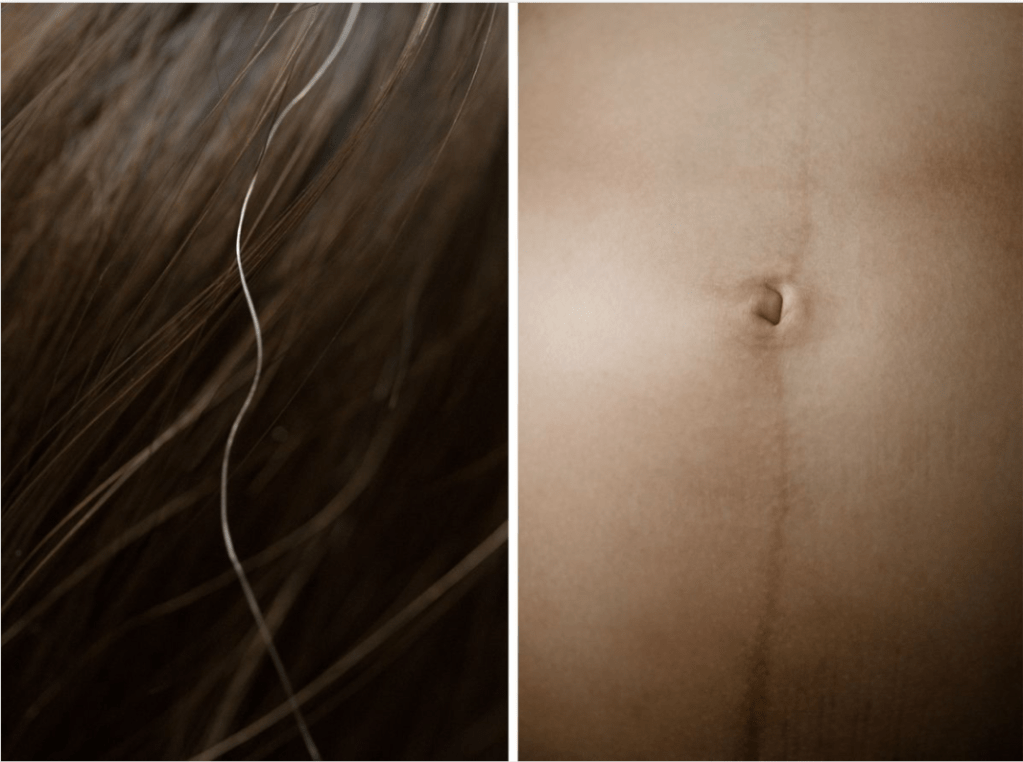
Whilst there are the three main liminal states in life, namely ‘births, deaths and marriages’ there are many transitions we go through such as entering a new career, navigating illness and divorce to name but a few. Felicia Simions ‘WOMB’ documents the changes that occur during pregnancy, a transition between conception and motherhood.
Kovi Koniwieki’s ‘Borderlands’, explores people who exist in a state of belonging and isolation, a state of neither here nor there. There is reference to how the liminal represents something outside of the real or normal world.
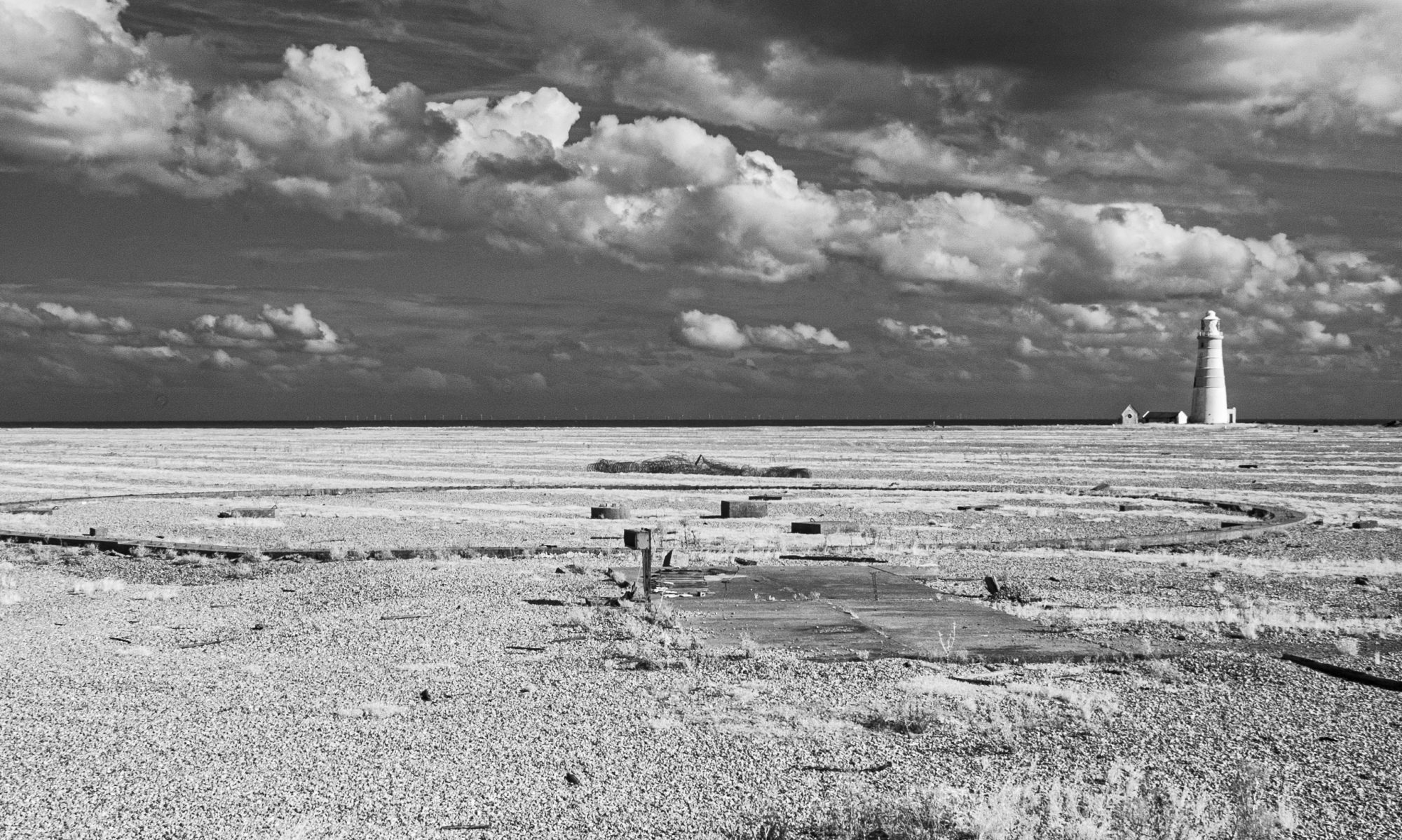
Ian Howorth’s photo book Arcadia (i. howorth, 2020) is full of beautiful cinematic images of a small seaside town. Much of it is desolate and some is unused and overgrown. The spaces represent areas where people have come and gone, and in a sense are ‘out of time’.
The beach as a liminal space
Burleigh and Jung (2010) describe the beach as a space of defamiliarisation, one that has unsolid ground and rough borders. There is an “alternative order to things” and it is a space which exists experientially rather than logically.
The sand itself is very much a space in-between, that is land and sea. As the tide comes and goes and the perimeter between sand and land will shift with the tide, there is a sense of ambiguity and instability.
The beach is a space that has it’s own set of rules beyond the socio-cultural norms particularly when we view it as a space for recreation and leisure. Martin Parr’s Last resort and Las Playas are good examples. There’s a particular colour palette we associate with the seaside, pastel tones of ice creams and beach huts and often the visual aesthetic associated with the beach is one of haze from the bright sun or the mist of the sea.
Burleigh and Jung also reference the temporal nature of the beach which can be “juxtaposed to photography as a medium that plays with our memory capacity” (Burleigh and Jung, 2010). We all have memories of the beach, usually seaside holidays as children which tricks us into viewing it as a space of permanence however with it’s constantly shifting state, we know it as a space of transience.
The beach, the sea and the sky provide what Burleigh and Jung describe as a conceptual blank and can give way to new ways of seeing. Whilst so much of our environment is predetermined and defined, the beach remains ones of mystery and spirituality.
“Water and air. So very commonplace are these substances, they hardly attract attention – and yet they vouchsafe our very existence. […] Mystery of mysteries, water and air are right there before us in the sea. […] Every time I view the sea, I feel a calming sense of security, as if visiting my ancestral home; I embark on a voyage of seeing.” (Sugimoto 1998)
(Burleigh and Jung, 2010)
References
Peter Burleigh & Sophie Jung (2010) The Beach as a Space of Defamiliarisation, Journal of Visual Art Practice, 9:3, 245-257
Simion, F., 2020. Felicia Simion – W O M B | Lensculture. [online] LensCulture. Available at: <https://www.lensculture.com/search/projects?q=Liminality&modal=project-1176023-w-o-m-b> [Accessed 8 October 2020].
Skutt, S., 2017. Midlife Metamorphosis: Archetypal Imaginal Psychology In Midlife Rite Of Passage. [ebook] ProQuest. Available at: <https://pqdtopen.proquest.com/doc/1885067578.html?FMT=AI> [Accessed 8 October 2020].
Slominski, A., 2019. The Fourfold Goddess: Maiden, Householder, Regent, Wise Woman. A New Metaphor For Women’S Midlife Creating Sovereignty And Power. [ebook] ProQuest. Available at: <https://search.proquest.com/openview/a13fa3d81ceb33090b4ea3f87ff9871c/1.pdf?pq-origsite=gscholar&cbl=18750&diss=y> [Accessed 8 October 2020].
Encyclopedia.com. 2020. Liminality | Encyclopedia.Com. [online] Available at: <https://www.encyclopedia.com/social-sciences-and-law/sociology-and-social-reform/sociology-general-terms-and-concepts/liminality> [Accessed 19 October 2020].
British Journal of Photography. 2020. Portrait Of Britain: Kovi Konowiecki On Photographing Liminal Spaces. [online] Available at: <https://www.bjp-online.com/2019/03/portrait-of-britain-kovi-konowiecki-on-photographing-liminal-spaces/> [Accessed 19 October 2020].
i. howorth. 2020. I. Howorth. [online] Available at: <http://ihoworth.com> [Accessed 19 October 2020].


There is a distinctly non-scholarly take on perimenopause by Caitlin Moran in today’s Times magazine (24/10/20)
LikeLike
Lol I’ll have a read. There’s. lot of it about.
LikeLike