An interesting discussion on the latest exhibition of Dorothea Lange: Words and Pictures at MOMA
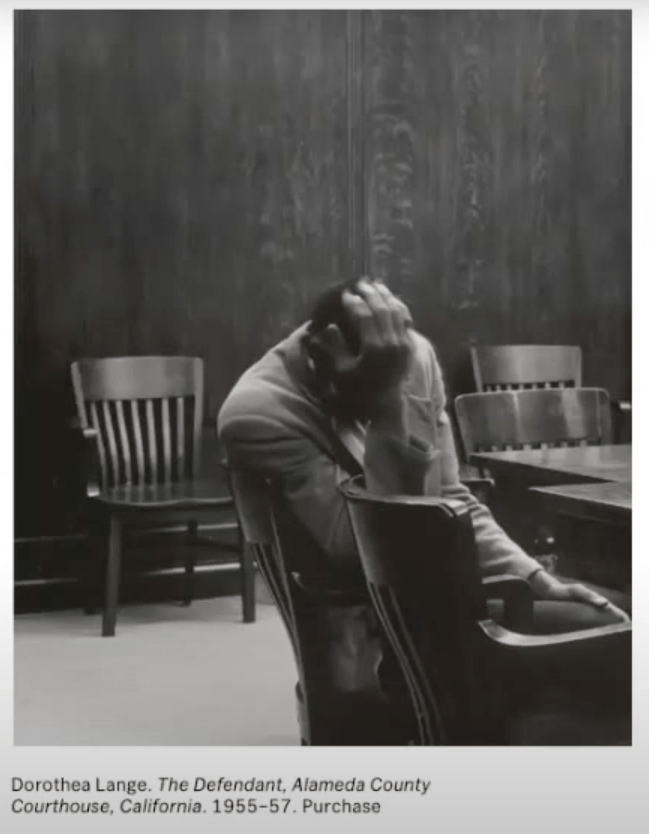
The central premise of the exhibition is to explore the relationship between words and pictures. Sarah Meister asks Sally Mann to write some text to accompany Lange’s image titled ‘The Defendant, Alameda County Courthouse’. Mann’s words centre on the “loud silence” that we find in this image.
They then go on to discuss Lange’s image: ‘Damaged Child’
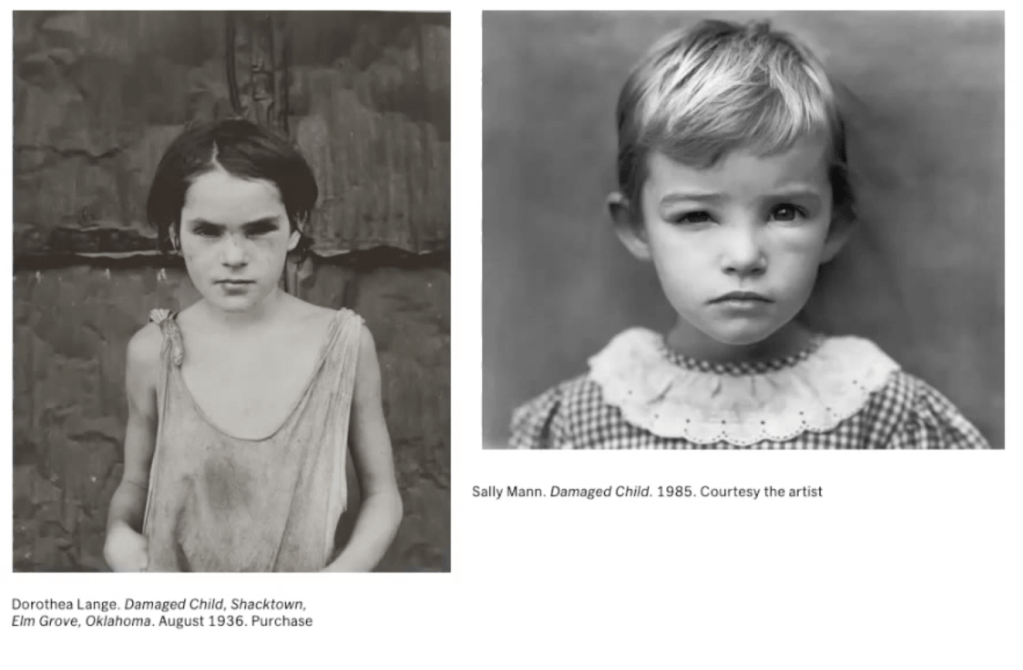
What we see in Lange’s image on the left is although the child is dressed in dirty clothing, looking undernourished, she retains a sense of strength and dignity which is what we see in ‘Migrant Mother’. Mann presents alongside Lange’s image, a picture of her own daughter who had come home with gnat bites on her face. What’s comforting as a student, is that Mann shows us the original images she took of her daughter.
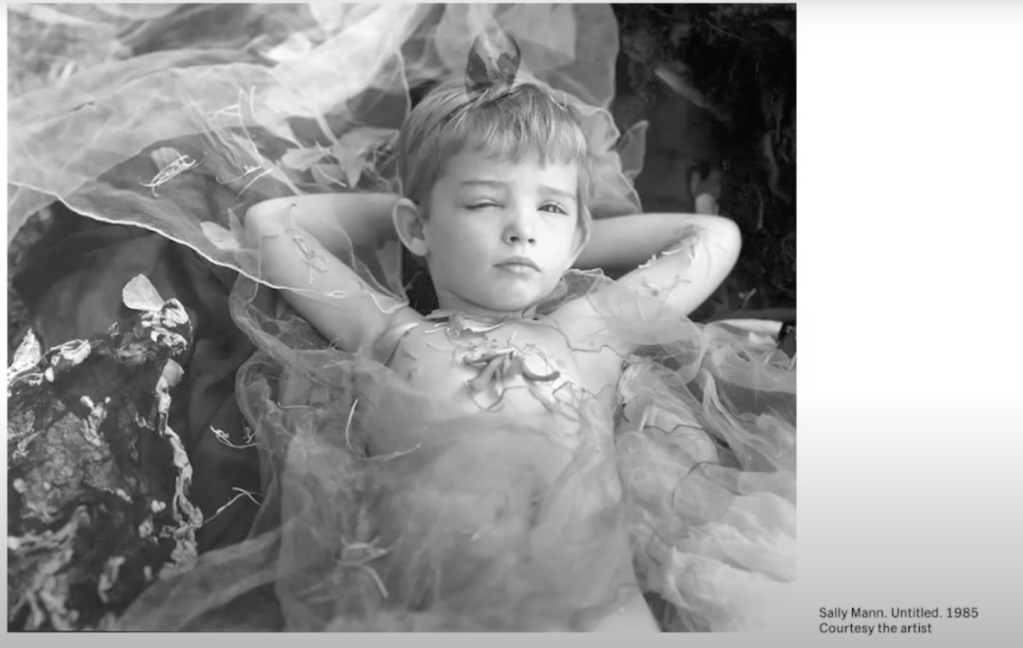
It’s very posed and doesn’t have the same impact as the simpler image she subsequently took (above right next to Lange’s image).
Meister and Mann discuss the image and text that Lange had pinned to the door of her studio (below).
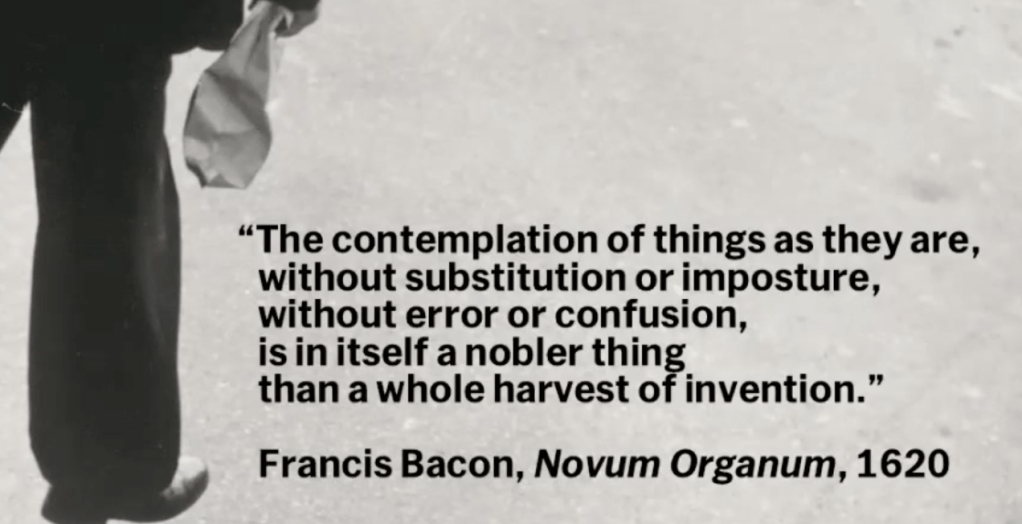
It’s obvious that this an important mantra for Lange although I seem to remember when attending an exhibition of hers at the Barbican in London that there was some questions over Lange’s levels of true empathy. It’s a conversation within Documentary photography and I would liken it to a Doctor and patient in that whilst empathy and understanding are important there’s also a job to be done which requires a professional distance, or in Lange’s case perhaps an artistic distance in being able to formulate a narrative.
This is one of the questions asked. How much of Lange’s images were posed? Meister responds that authenticity and the posing of images are not mutually exclusive. Mann agrees that by the very presence of the camera is changing the situation, so the photographer ‘poses’ the subject to best suit the narrative.
Another quote to remember:
If inspiration ever came, I think she’d find me working.
Picasso
Mann talks about a body of work and how it’s not about amazing ideas and inspiration but “doing the hard work”.
With regards to image and text: Lange talks about the “connective tissue between images and text”. Mann agrees in that words provide “nourishment to the images”.
The discussion turns to how was Lange treated by the government compare to Walker Evans who was pretty much given carte blanche to do what he wanted and receive the funds needed. There’s a question over whether Lange was seen as threatening. The government wanted images of ‘White people’ affected by the depression and the dust bowel as it was thought that congress and the wider population would have more sympathy for the measures proposed to help these people. Lange wanted to portray things as they were.
 Landscape, Place and Environment