Joni Mitchell said: “You don’t know what you’ve got till it’s gone”. Photography holds a unique place as a medium that captures and preserves moments in time. It also reminds us what we have lost.
In the late 1970’s/80’s, scientists came together with a general consensus that man made global warming posed a threat to human existence. They concluded that is was possible to avoid the rapid increase in global temperatures by mitigating our behaviours. In the main, this meant the cessation of the burning of fossil fuels and a significant reduction of production of CO2. In the past thirty to forty years there have been many summits, treaty’s and promises made by governments around the world however no significant action has been taken.
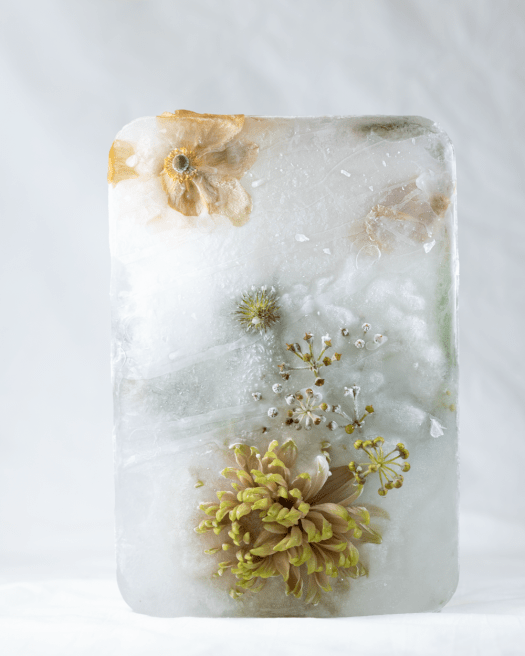
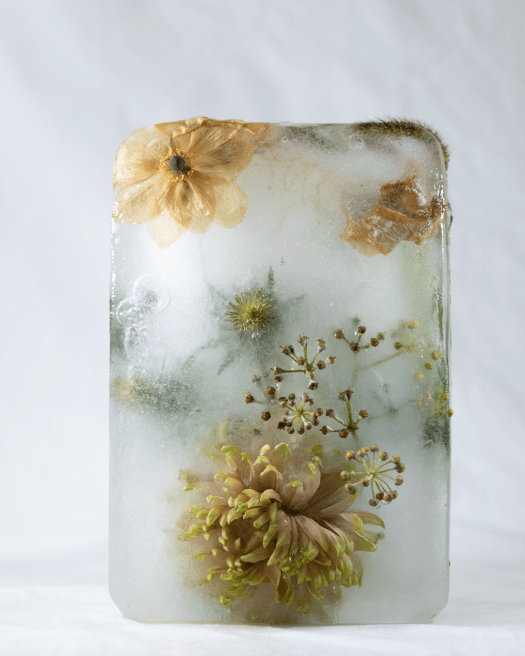
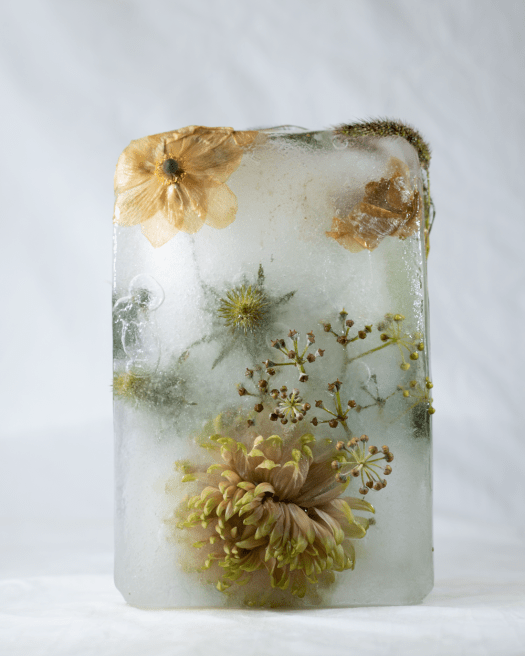
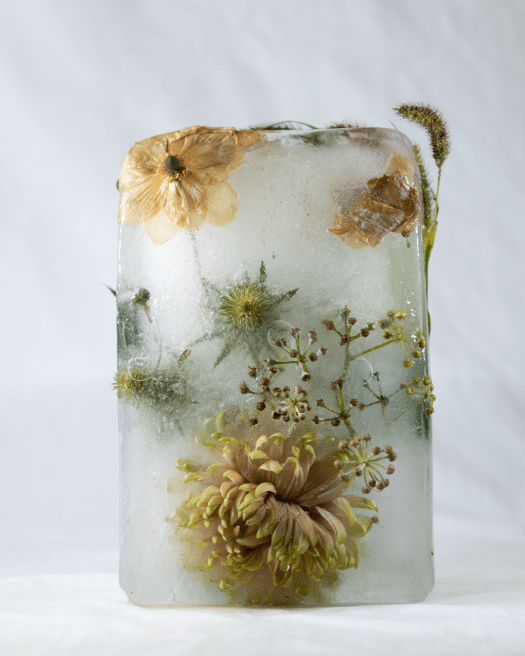
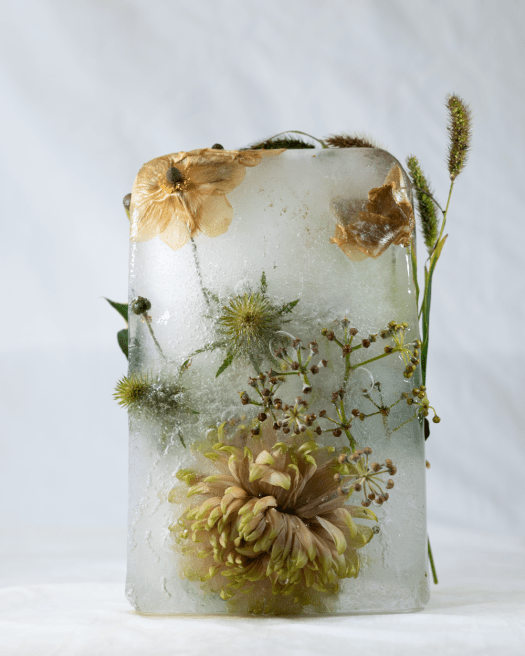
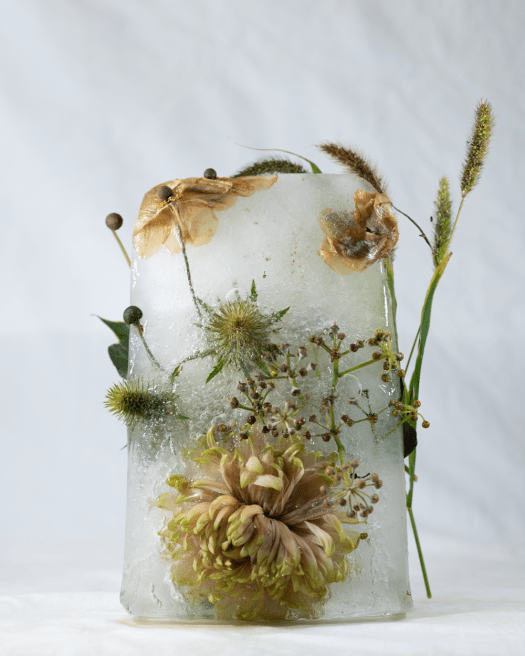
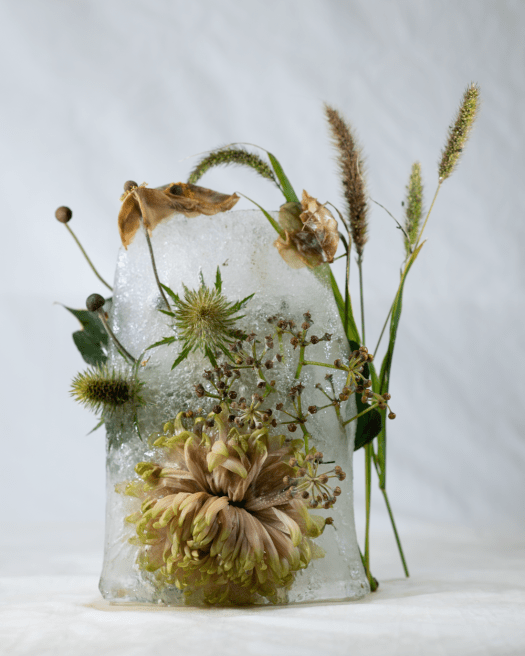
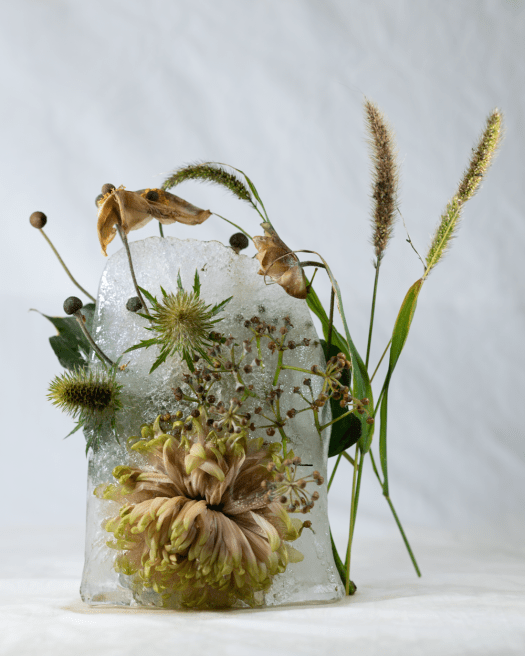
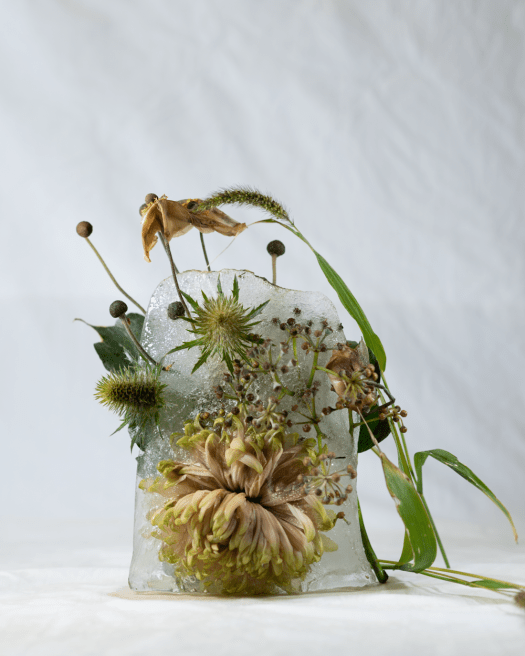
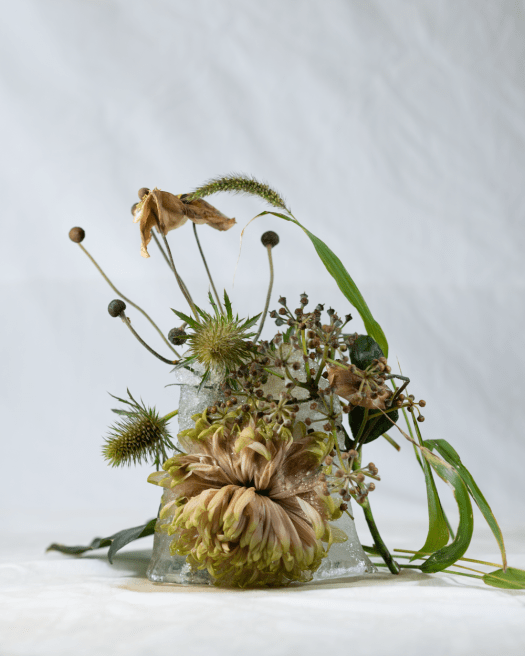
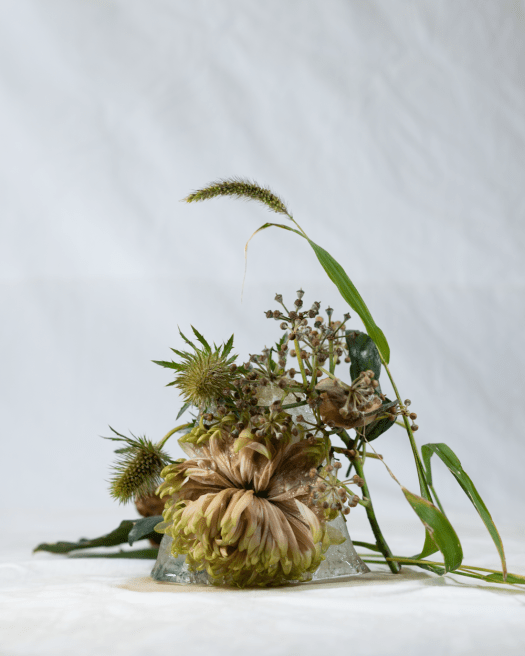
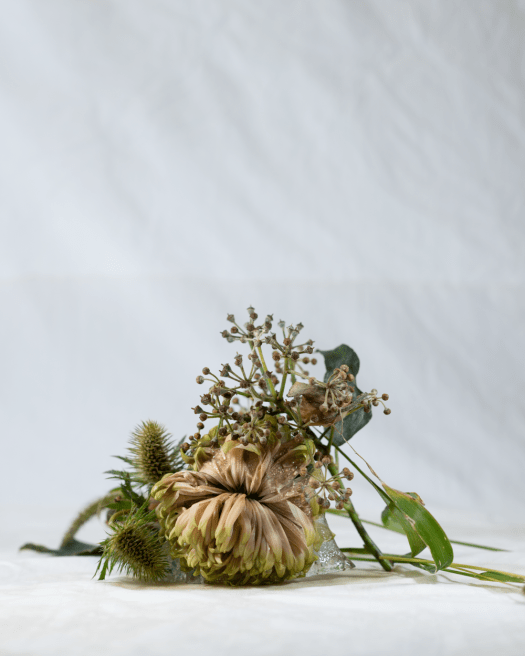
The Final Hour is a typological series of images that explores the fragility of life particularly in relation to concerns about rapid man-made global warming. The flowers were frozen in a block of ice and photographed at regular intervals as the ice melted. By freezing the flowers, their beauty is preserved. The cell walls within the flowers expand on freezing. As the ice melts, the flowers quickly degrade demonstrating how fragile life can be.
The original inspiration behind this piece was observing the work of Ori Gersht. Often presented as performance pieces, Gersht explores beauty and fragility and questions what is momentary and what is enduring, which Gersht writes is “a contradiction embedded in the very nature of photography.”(Gersht, 2018) Subsequent research into the photographing of flowers frozen in ice took me to the work of Makoto Azuma and Marissa Culatto.
The Final Hour is also representative of Still Life art. This genre is said to celebrate material pleasures but also their transitory nature. Still life also served to reminds us of the impermanence of human life. The very act of photography is to freeze and preserve a moment in time but it also demonstrates that this moment is lost forever.
 Landscape, Place and Environment