Interpretation of the brief
I began this assignment by photographing my local park. At first, I focussed on certain views and how they were changing with the seasons. What began to interest me was the way people used the park, whether dog walking, sports or just passing through and in hindsight what I’d have liked to do is create a piece that was representative of the relationship that local people had with this place.
With lockdown, this relationship changed as what I observed was more people than usual using the space for their ‘hours walk’ and later as the weather got warmer and restrictions began to life, to meet friends for socially distanced picnics. I’m kicking myself a bit that I didn’t keep up my photography over the summer. There were a lot of distractions but also I felt that photographing people didn’t seem appropriate at the time.
Having reached the latter stages of the year and the course, I’ve felt a bit panicked about what I was going to submit for this assignment. I knew, perhaps a bit tongue in cheek, the theme needed to be ‘last minute’ or ‘eleventh hour’ and the project shot over a shorter period of time. When I encountered the work of Ori Gersht, an idea began to form.
Relationship to photography and visual culture
What has stuck with me, is the question around photography of what is enduring and what is momentary? Photography freezes and preserves a moment in time. Going back to Assignment One, we know that nothing lasts. Life is impermanence. Yet there is something in our nature as human beings to collect and preserve and look backwards as if by understanding our past, our history and heritage defines and makes sense of our identity in the present. It gives us context.
Strengths and weaknesses and ideas for further development
The strength of this piece is the ability to think outside the box and to approach something that is current. It’s potential weakness is that I’m stretching the brief.
Technical choices and creative influences
I chose to use an 85mm prime lens as I don’t own a macro lens. Lighting was difficult as I am inexperienced. Using an old sheet on my coffee table, I found some spotlights that I used to back light the scene, then a large portrait light positioned slightly to the side and a reflector over the top. Although my initial inspiration was originally Gersht, I particularly liked the approach from Marisa Culattos work.
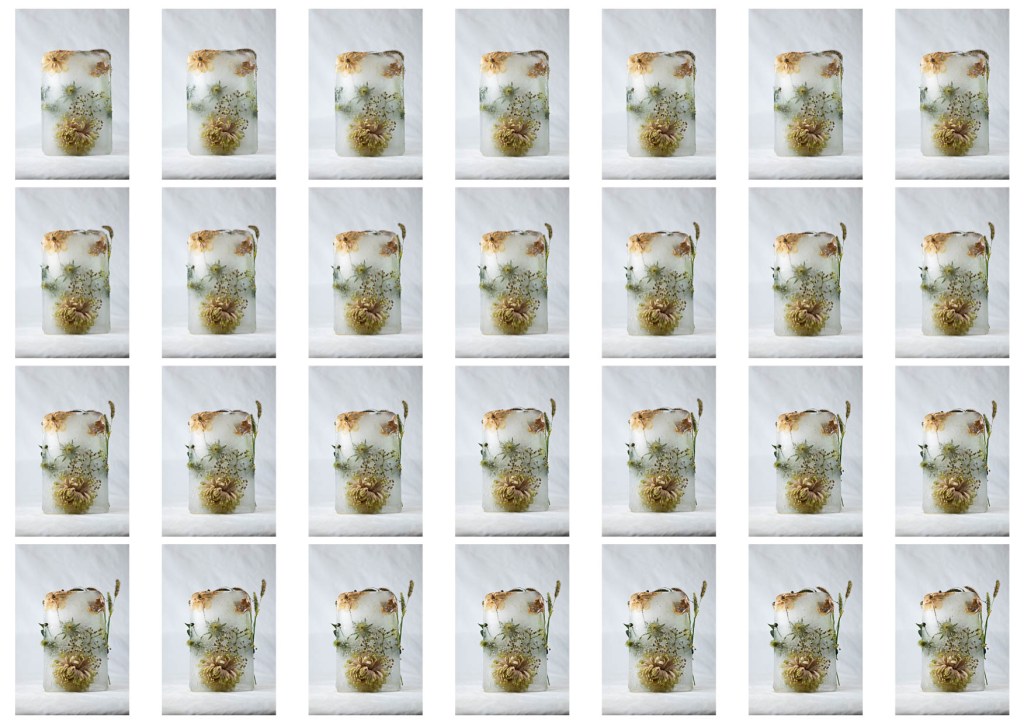
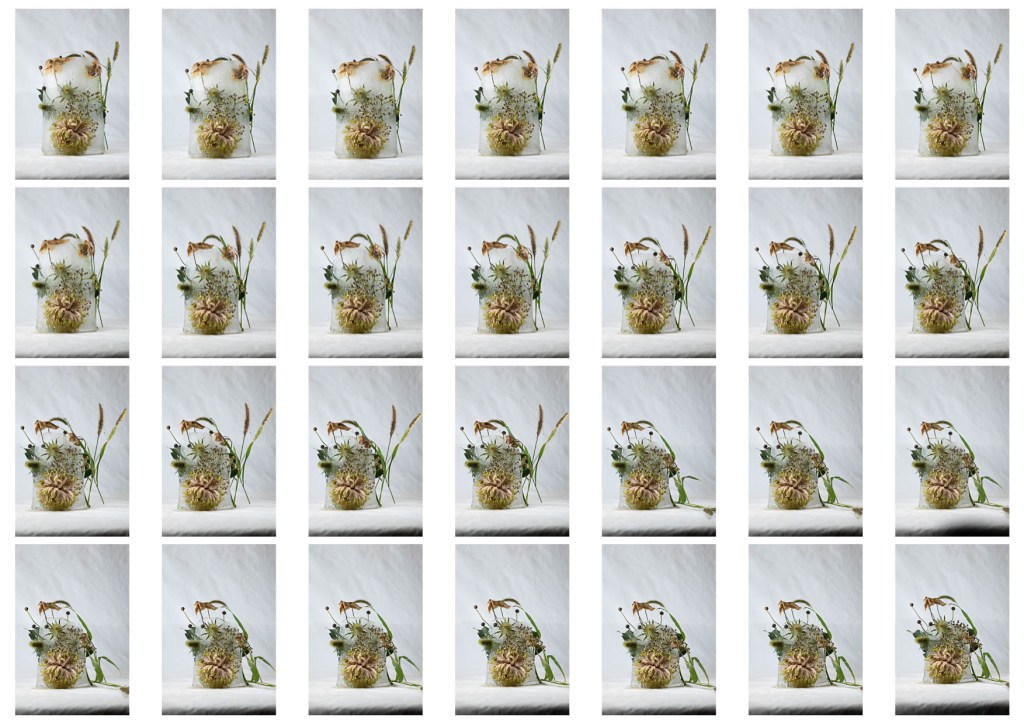
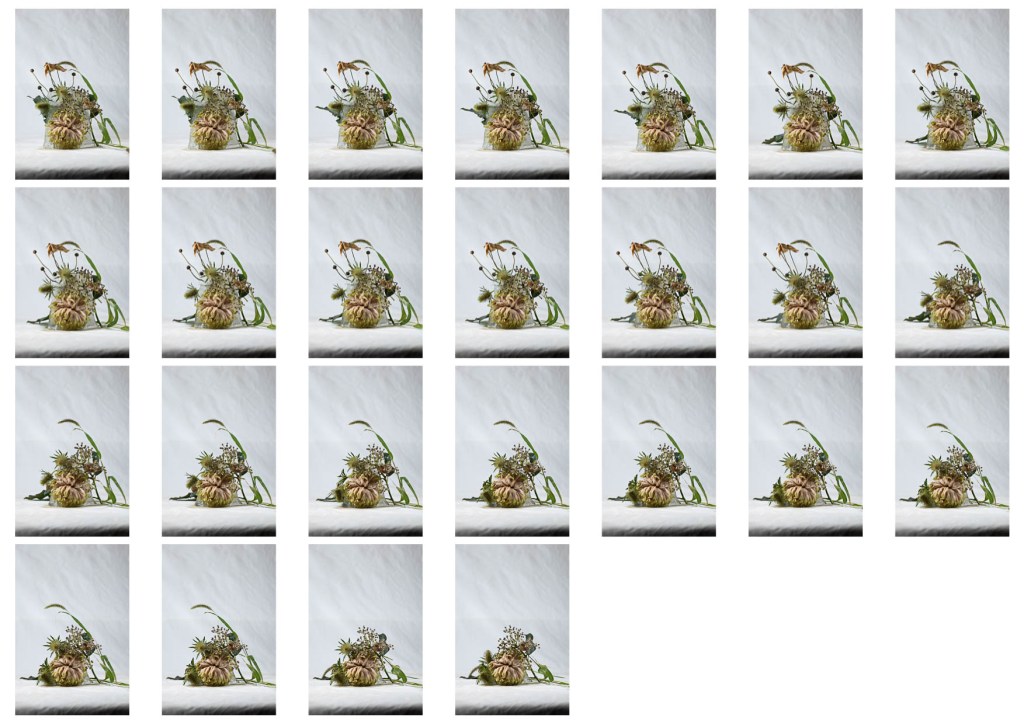
My first attempts didn’t work out so well. The compositions within the ice weren’t very imaginative but mainly I struggled with the lighting. Eventually, I seemed to get it right. Whilst I know that usually the advice would be to use a small aperture to capture detail, I was keen to not let too much of the background be in sharp focus, so I’ve shot this at f4 which seems to still capture plenty of detail but allows for a soft background. I positioned my camera on a tripod and shot images at regular intervals.
Explanation of certain views and visual outcomes
The aim of the images was to show change over time and to explore beauty and fragility.
The Final Hour
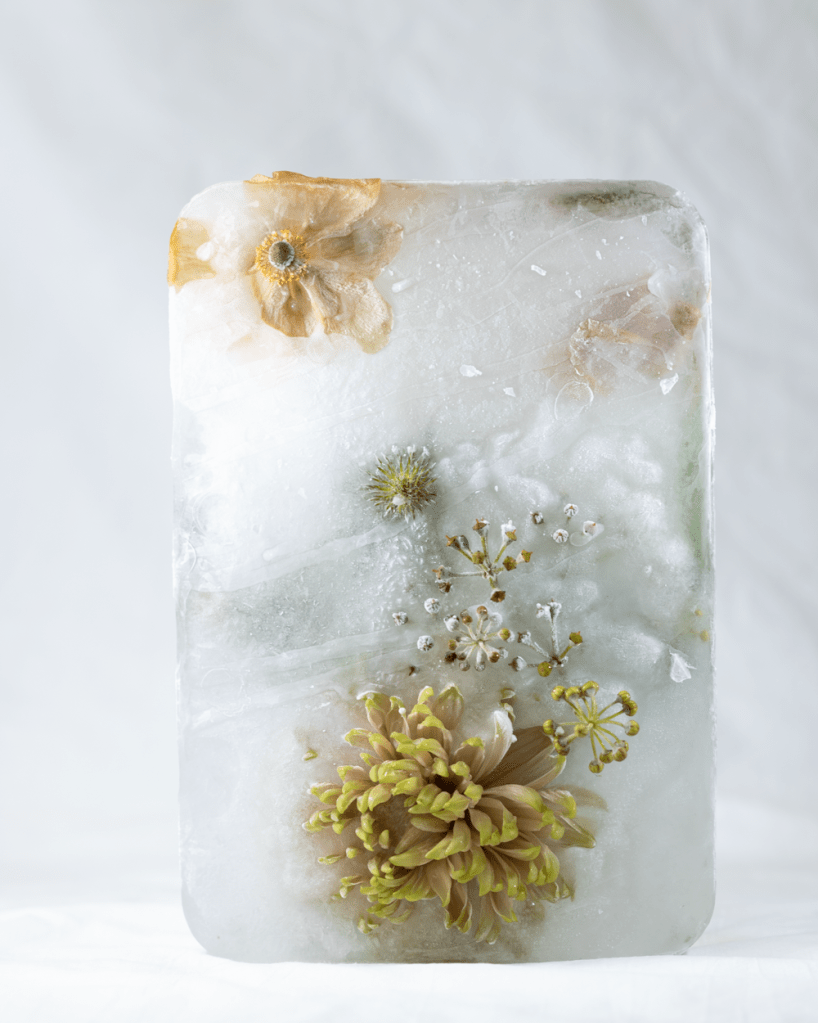
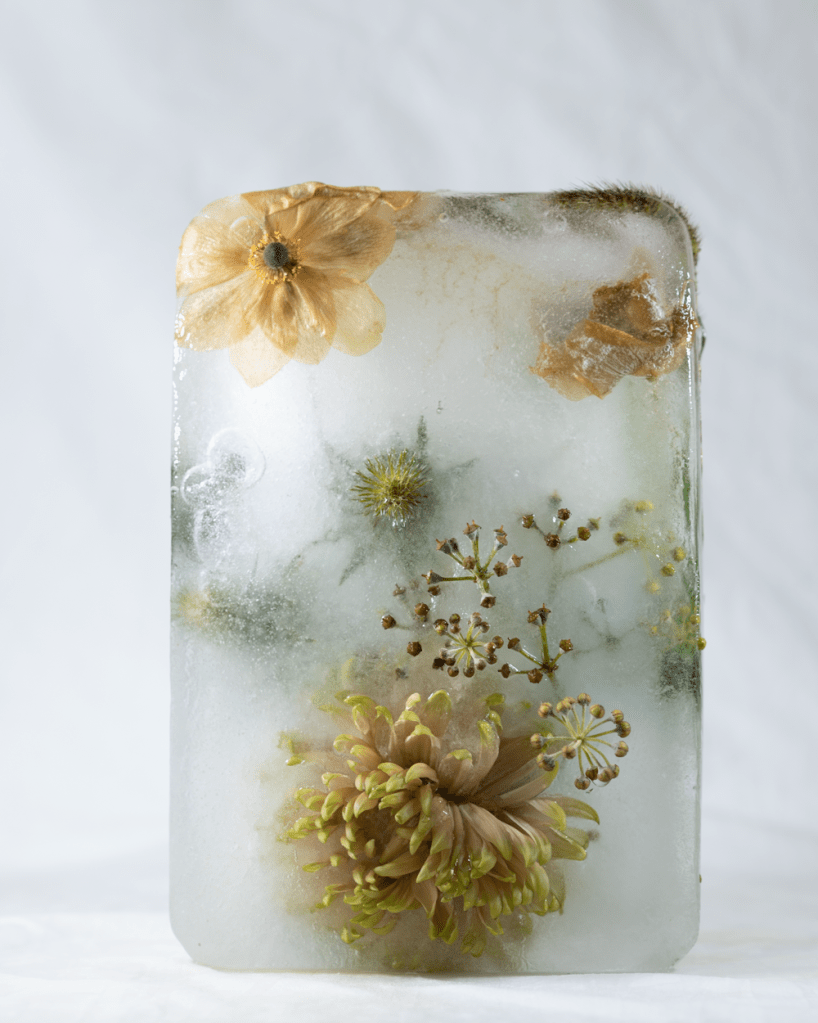
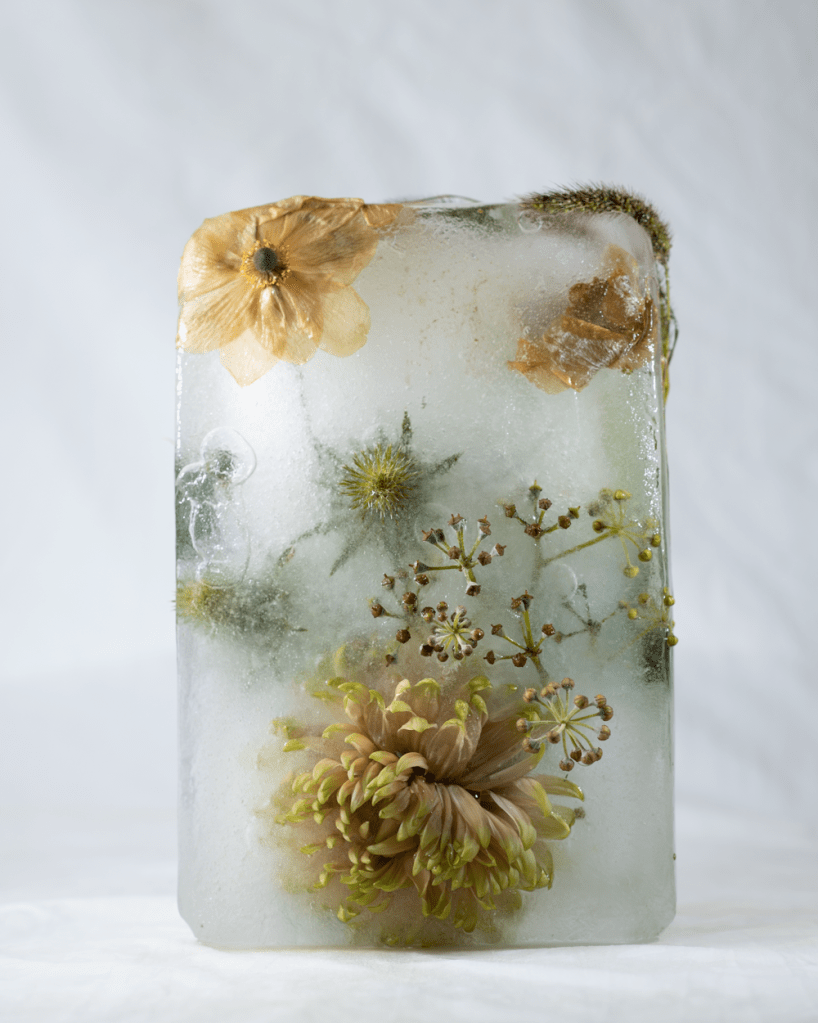
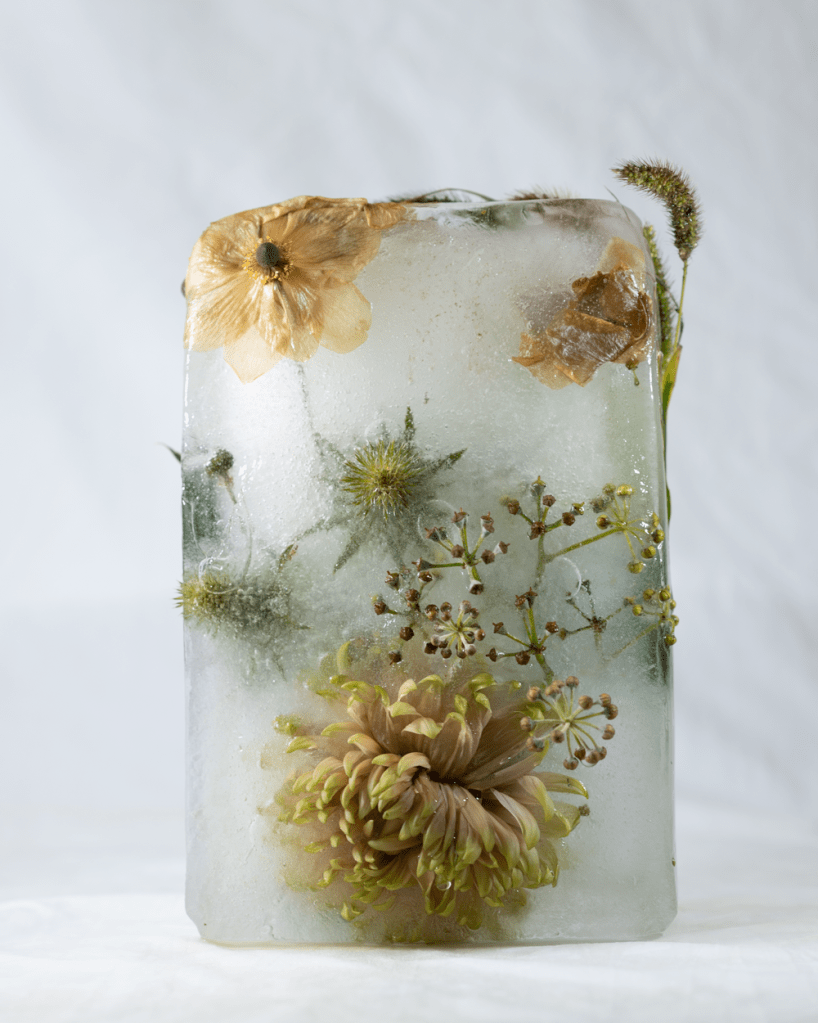
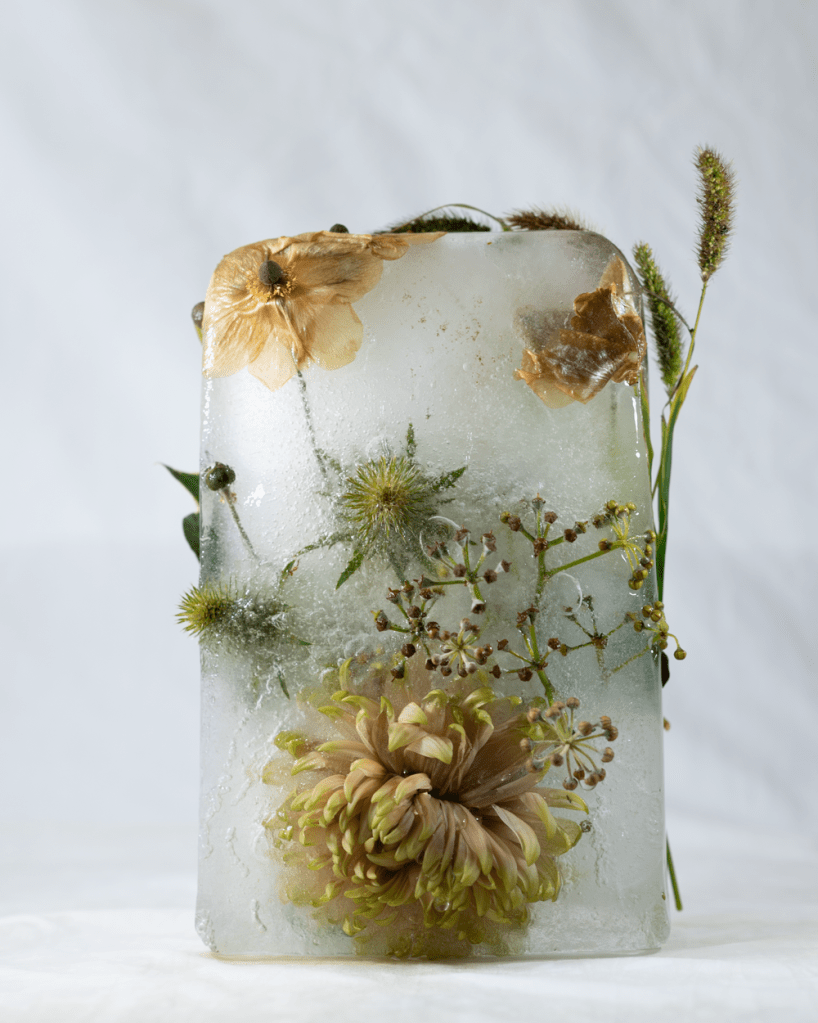
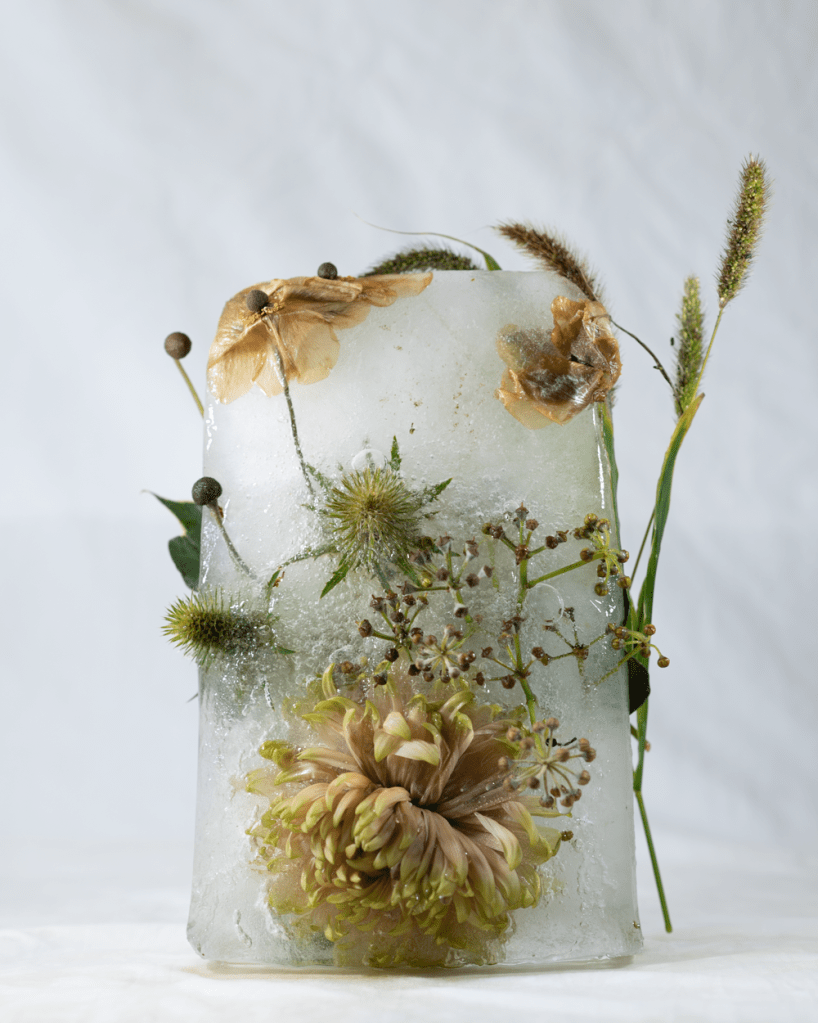
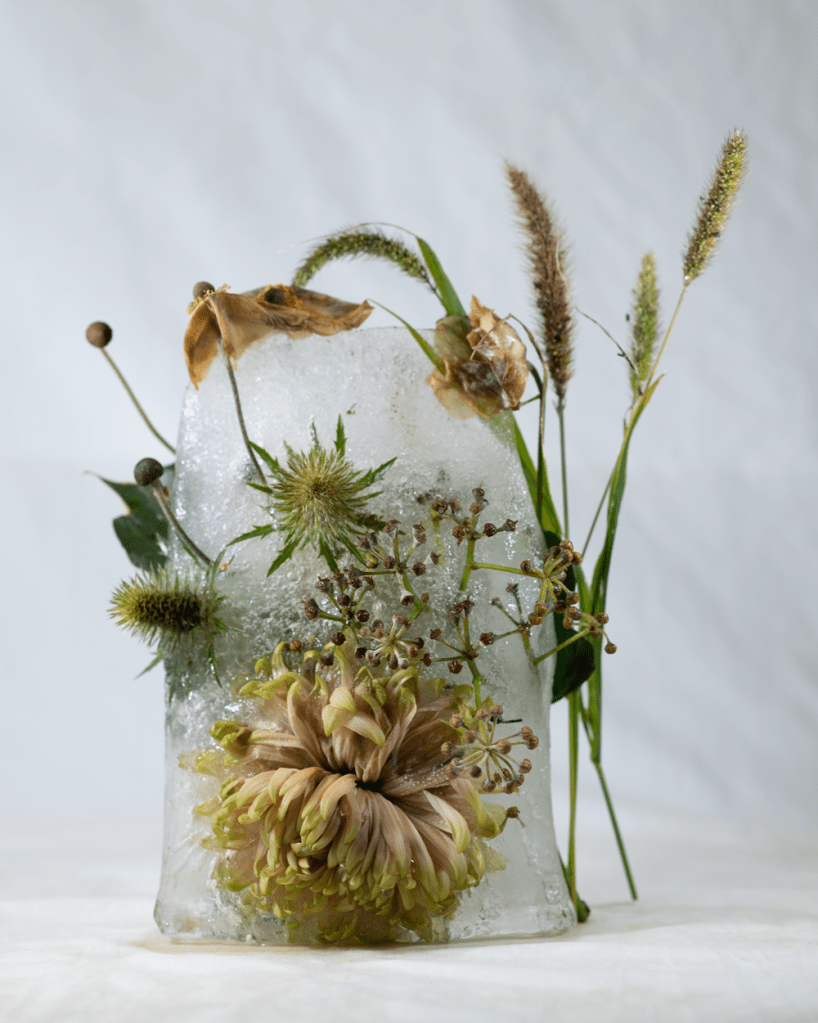
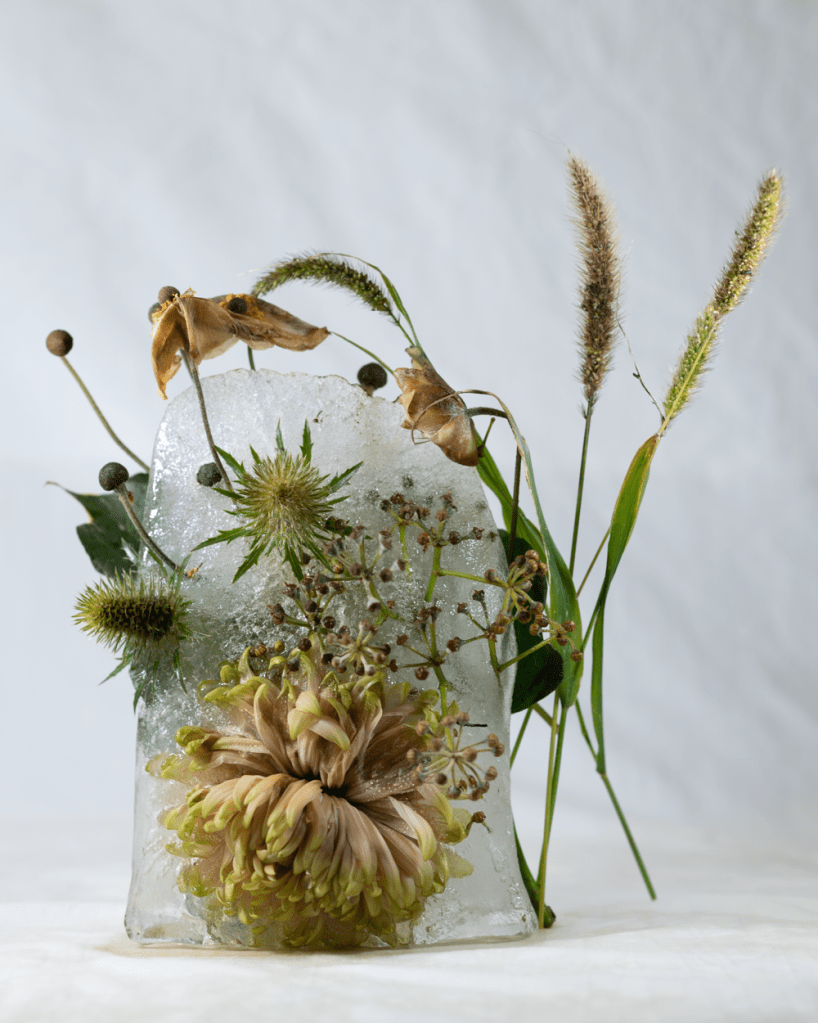
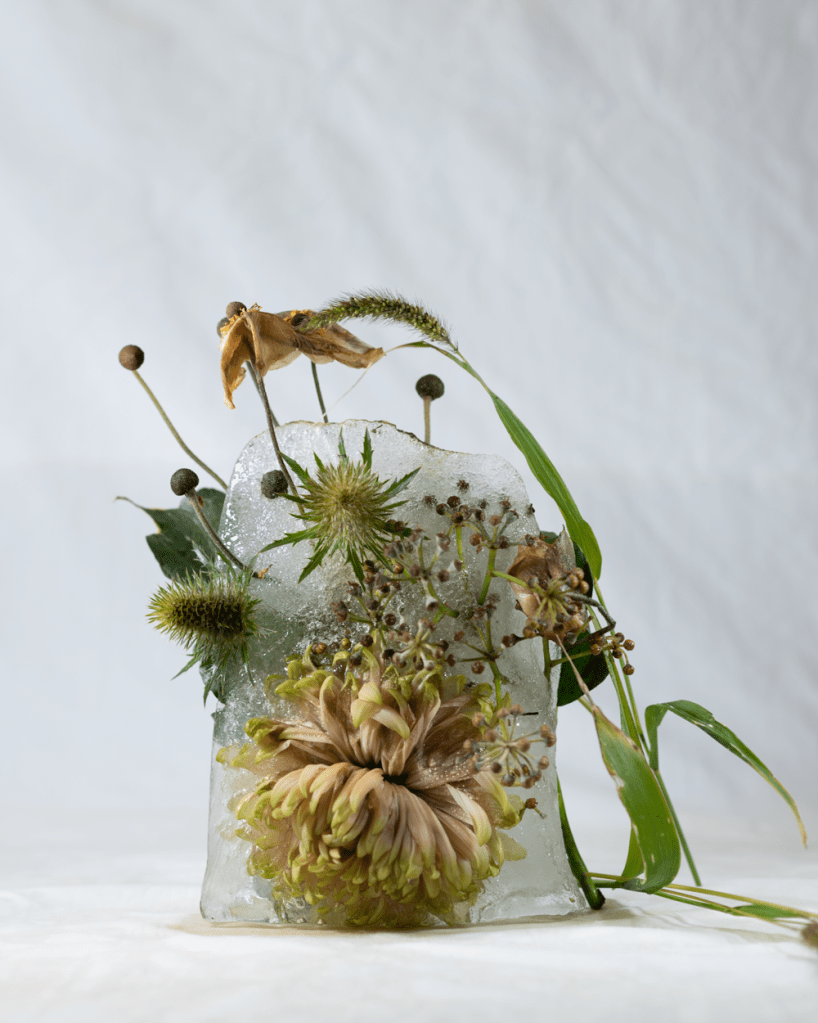
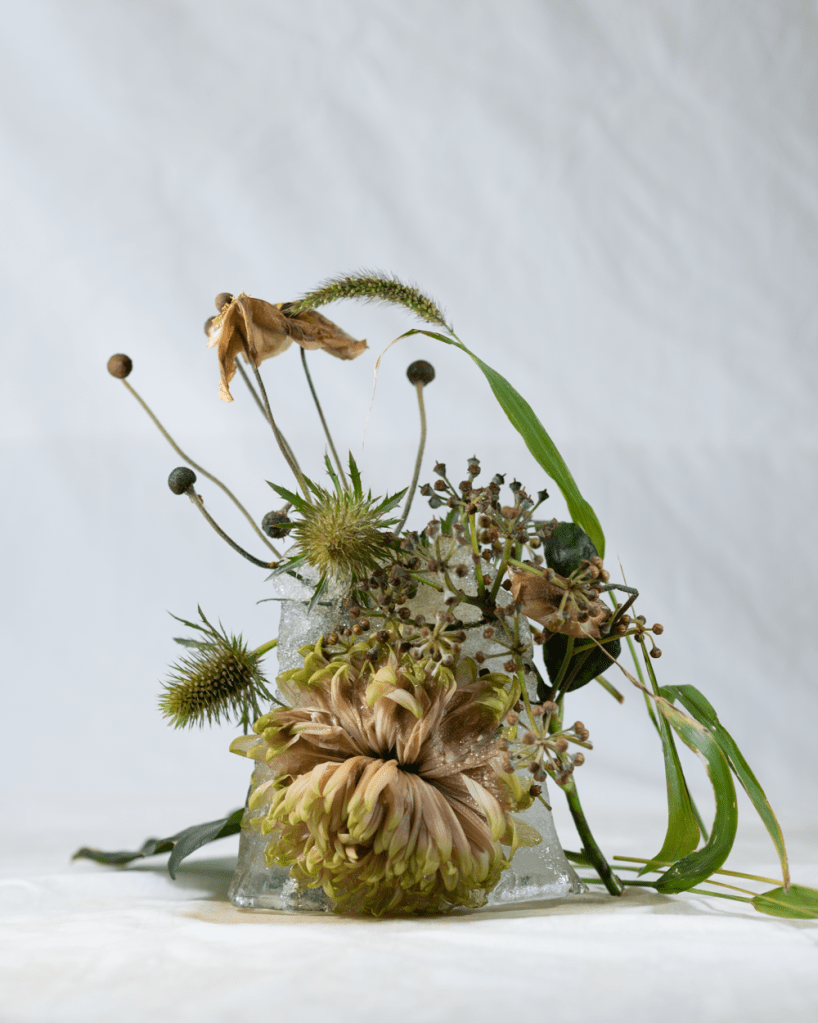
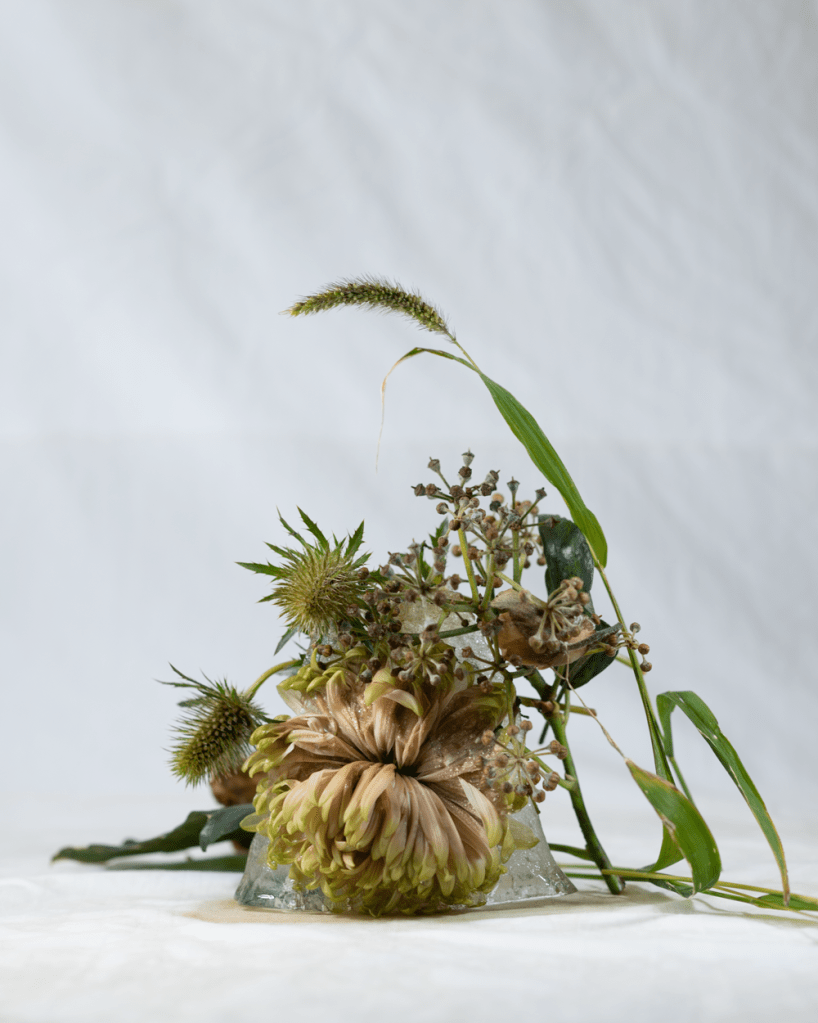
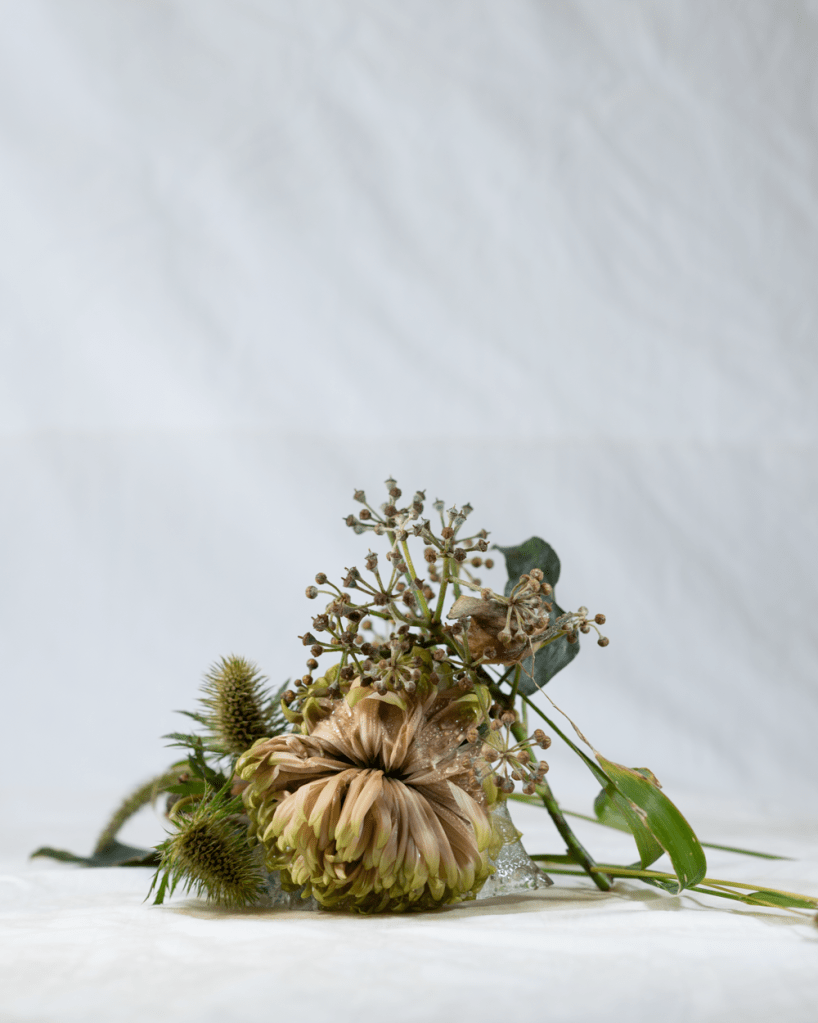
Joni Mitchell said: “You don’t know what you’ve got till it’s gone”. Photography holds a unique place as a medium that captures and preserves moments in time. It also reminds us what we have lost.
In the late 1970’s/80’s, scientists came together with a general consensus that man made global warming posed a threat to human existence. By mitigating our behaviours, in the main, cessation of the burning of fossil fuels and a significant reduction of CO2, it was possible to avoid the rapid increase in global temperatures. In the past thirty to forty years there have been many summits, treaty’s and promises made by governments around the world however no significant action has been taken.
Scientists, with the help of photography, have documented the significant reduction in sea ice in the polar regions. The sea ice and glaciers act to reflect the sun’s heat back into the atmosphere therefore serving to regulate Earth’s temperature. As this ice retreats, the darker seawater absorbs more heat from the sun, increasing sea temperatures and threatening the complex ecosystems of ocean life and destabilising our habitat that enables us to exist.
Building on the ideas of Ori Gersht, Makoto Azuma and Marissa Culatto, this piece explores the fragility of nature. By freezing the flowers in ice, their beauty is preserved. The very act of photography is to freeze and preserve a moment in time but it also demonstrates that this moment is lost forever. The cell walls within the flowers expand on freezing. What we see as the ice melts, is the flowers quickly degrade demonstrating how fragile life can be.
Contact sheets
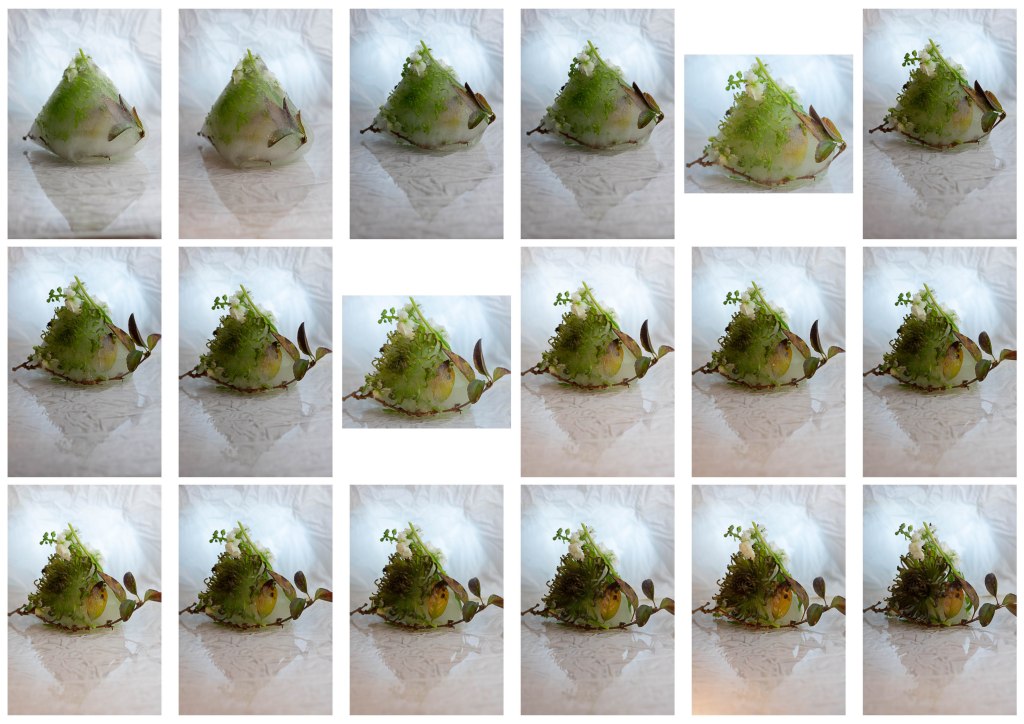
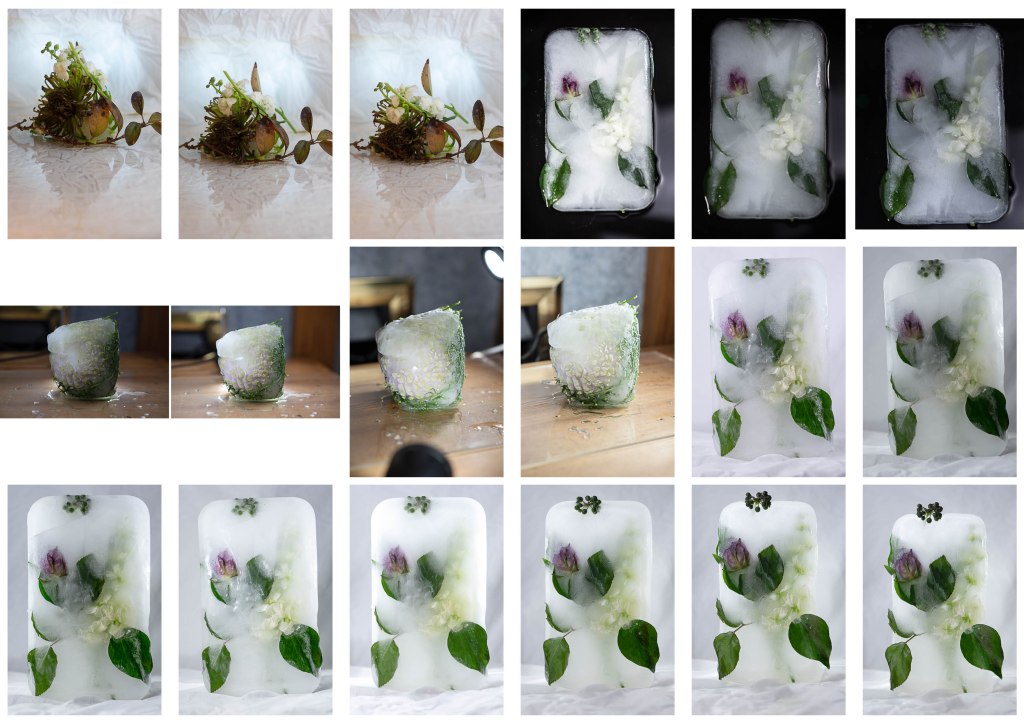
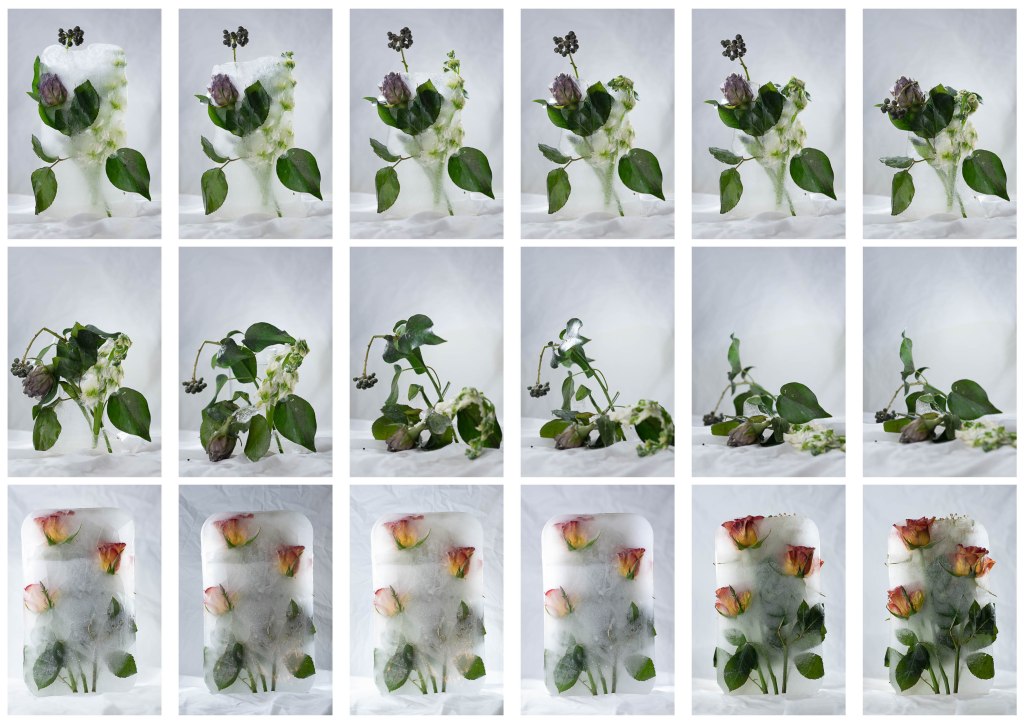
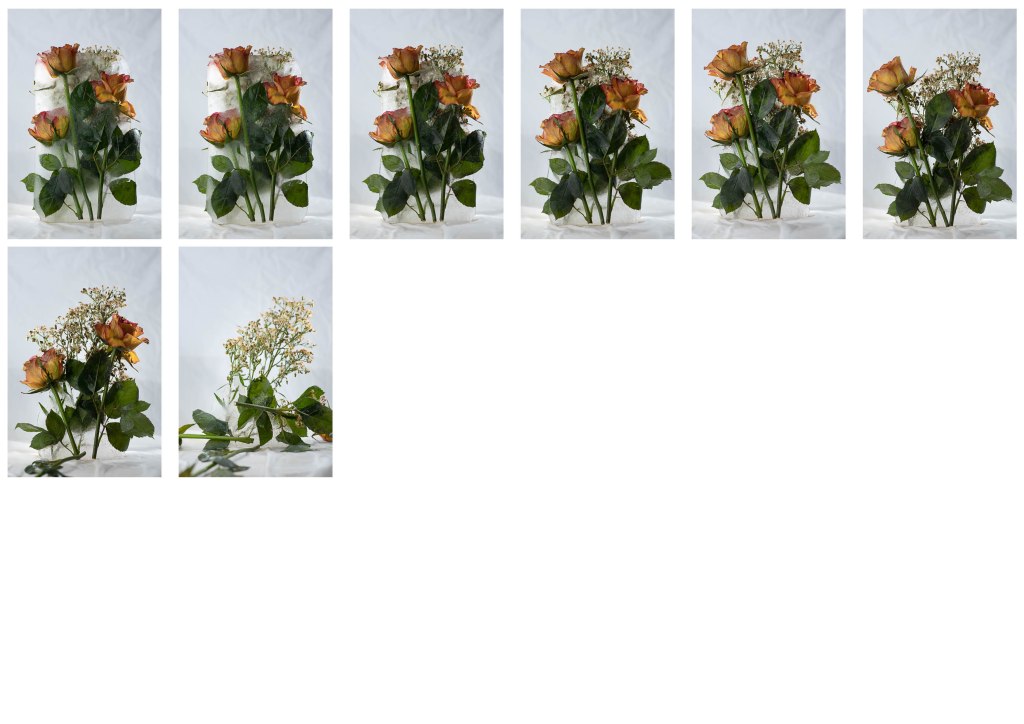
Demonstration of technical and visual skills
This was a learning process in how to firstly create the blocks. The ice turned out to be very cloudy which I’ve since read that it can be affected by the hardness of the water but also how the air bubbles as the water freezes. It may be that I try again, filter and boil the water to create blocks that are clearer. I may seek some advice from my Landscape group in ideas of how to light this. Reflective surfaces are difficult but I’m sure there’s a clever way of managing this. Overall I’m pleased with the outcome.
Quality of outcome
The final block I used, I think works well because it has a bit more interest than the previous ones so overall I’m happy with this.
Demonstration of creativity
I’m good at planning and the ice flower arrangements are well conceived. In the past, I’ve been afraid of ‘copying’ someone else’s idea and have felt pressured to produce something original. I now feel it’s really nice to take someone else’s idea and put your stamp on it. It’s difficult to put into words but it’s as if you’re not alone in the project and there’s comfort in following someone else’s journey.
In order to present this work, I’m planning to create a mobile as it is something dynamic. I have an old tree branch which I’d like to suspend the images from. I’m hoping that I can then create a video still of the mobile hanging from the ceiling.
Context
I have some reservations about this work as I’ve stretched the brief a little. However I think the images work. There’s something a little bit disturbing in the way the images begin ‘beautiful’, and as the ice melts and the flowers degrade and fall.
 Landscape, Place and Environment