Interpretation of the brief
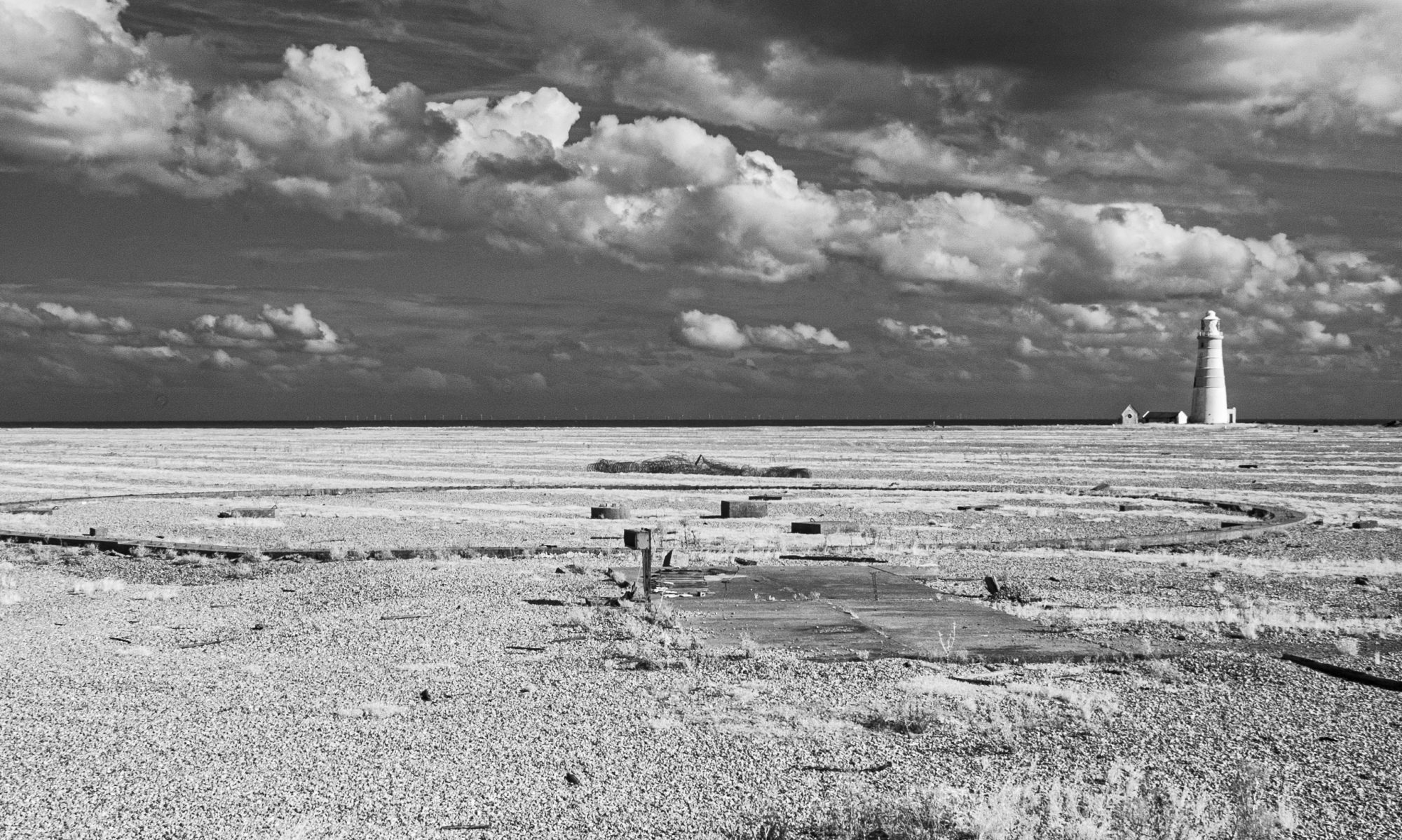
I explored The Naze back at Christmas when I was doing the first assignment. What struck me about the area was it’s ‘natural beauty’ but also how it had been shaped by nature and humans alike. The cliffs themselves I find very beautiful especially the layers with the tree roots permeating through them.
It felt like a special place, one that is quickly disappearing. Even the short time I have been visiting the area, I have seen changes in the cliff face. Sometimes you hear pieces of the cliff falling which is then washed away by the sea. It is because of this I chose to look at the concept of Place in relation to Time.
Relationship to the photography and visual culture addressed in Part Three
What we learnt in part three of the coursework was Landscape as memory and memorial., our connection to Place in terms of our local history and the Place we call home. We also looked at Landscape from the tourist perspective and the idea of Nature as a leisure pursuit.
Strengths and weaknesses and ideas for further development
I always saw this project as a book and the FlipHTML I think is an excellent format. I feel I’m getting better at visualising the layout for a book which is not as easy as you first think. One weakness may be that I chose to not include two key landmarks of the area, Naze tower and the second world war lookout posts. Whilst the lookout posts are included in the first image, I’ve not made any reference to them. Likewise with the Tower, I just didn’t have any shots that I was 100% happy with plus when I tried to incorporate the old black and image of the Tower, it felt like too much. Instead I’ve tried to convey more about our relationship with nature. As a consequence, it may be I’ve missed the brief a little.
Technical choices and creative influences
Shooting at this time of year can be challenging due to the high sun which creates high contrast. I have settled on using a new lens, 35mm full frame. It’s surprisingly a lot of image area to fill. I used a polariser and some days a tripod.
Creatively, I was inspired by Edward Burtynsky’s work: Anthropocene. He presents the beauty of the natural world with ‘us’ in it. I’m very interested in his environmental outlook, so his is work I shall be following. I was also inspired by the geo-aesthetic images I came across. In a strange way, although I didn’t reference him in my research, I think I’m influenced by Martin Parr. Whilst I like my own company, I’m interested in human behaviour and have realised I like the effect of including people doing ordinary things in my photos. It’s not the direction I expected.
Explanation of certain views and visual outcomes
1 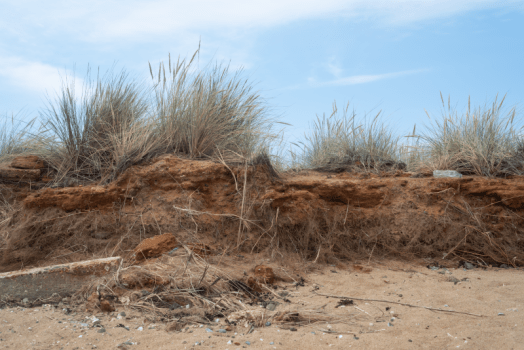
2 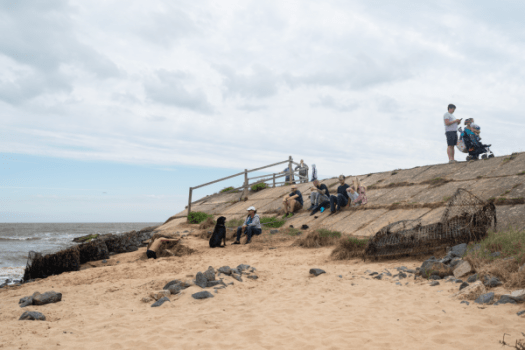
3 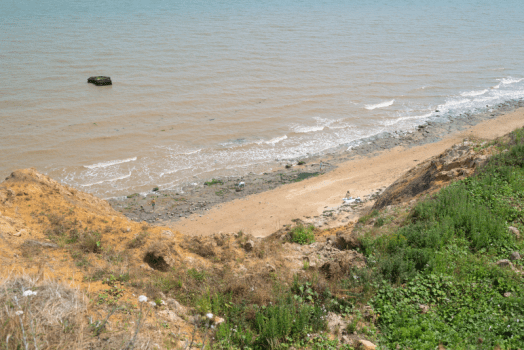
4
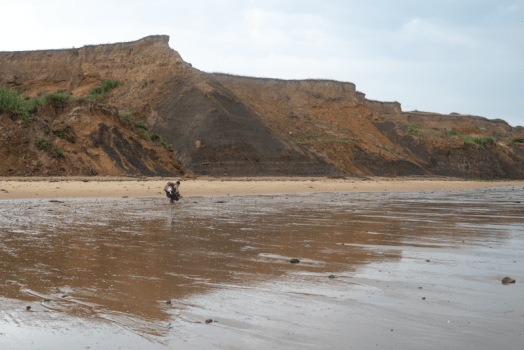
Image no.1 was one that I liked however omitted because it was a bit dark and the subject was carrying a pink and white sieve. It appears in the image like an artefact and is really distracting. Image no.2 I’ve included towards because of the plastic bottle (which I moved to compose the shot). It may be too subtle. Image no.3 I like however I’m unsure of the quality. It was some weeks ago whilst there were still a lot of lockdown restrictions in place. It gave me the impression of the group of people ‘holding back the sea’ even though the original sea defences have eroded. Finally image no.4 felt ‘impending’. The chap on his phone sunbathing is being trapped by the falling cliffs and the incoming sea.
The Naze
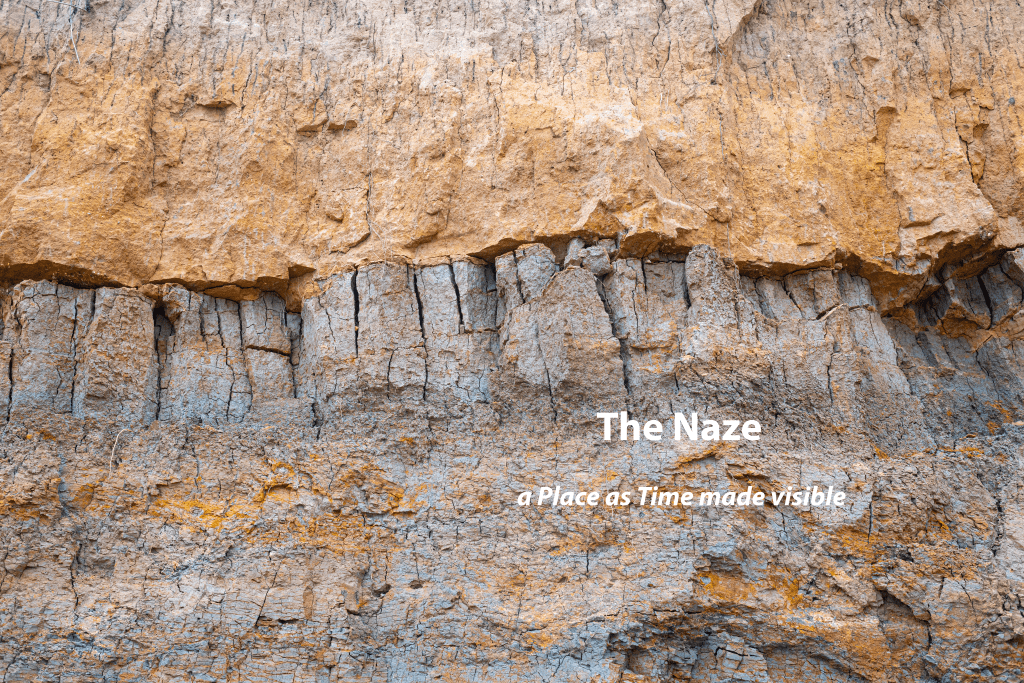
The Naze is a mix of Nature altered and human altered landscape. Whilst at first glance it appears as a wild natural landscape, it has been shaped by humans for the past two thousand years since the first Viking settlers farmed the fertile soil. Over time, communities have come and gone. The area is now best known for fossil hunting. Children excitedly dig for sharks teeth and if you’re lucky, a left handed Whelk shell.
The beautiful cliffs however reveal layers of deep time. This landscape was formed around 50 million years ago which can be seen in the layers of sediment, the grey ‘London clay’ and the orange, sandy ‘Red Crag’. Due to rising sea levels and the soft nature of the cliffs, there is a process of rapid erosion taking place. The Naze is a disappearing Place.
For locals this Place is one they call home. For tourists, this is a Place of leisure. For Scientists, this is a Place of special scientific interest that allows us to understand past Climate events and informs us of what may come. The layers of rock come from a time before our current glacial – interglacial “icehouse” state when the Earth’s Climate was less stable. By piecing together ‘fragments of time’, Scientists conclude we may be headed for another mass extinction event. This time us.
Yi Fu Tuan comments on the relationship between Time and Place. Time can be cyclical as in the changing of the seasons and the movements of the tides. Or we can think of it as directional. The Naze represents a Place as time made visible. There are remnants everywhere of the past, from fossils to decaying bricks from buildings and the second world war lookout posts which once stood on land. This passage of time may inform us of what is to come.
This work was Influenced by Edward Burtynsky’s Anthropocene as well as geo-aesthetic images. I have probably taken a softer view of the human ‘abuse of Nature’ instead, focussing on our love of nature and exploring our past, as well as the memories most of us have of a day trip to the beach. But there is a little warning here, it may that one day we’ll be the fossils buried in the depths of time.
Contact sheets
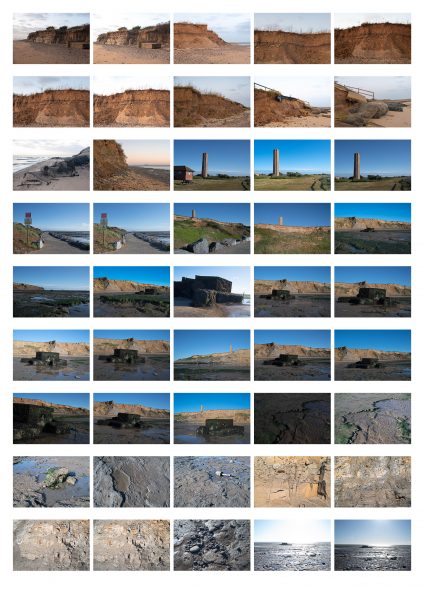
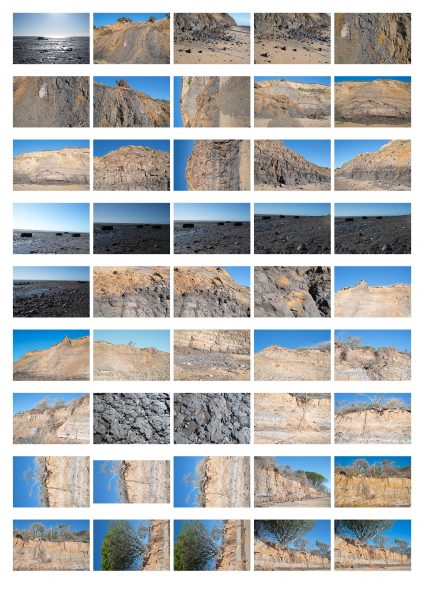
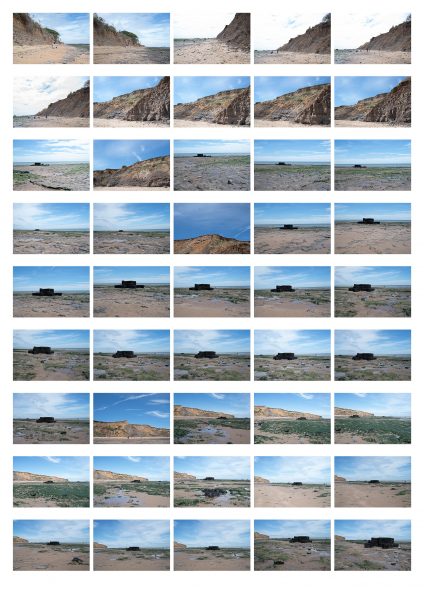
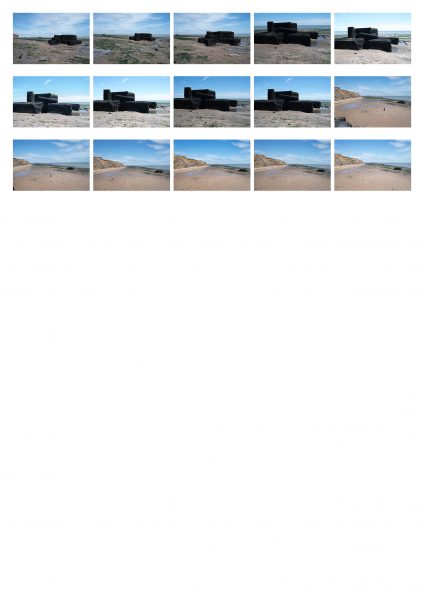
I have a ridiculous amount of images. In the beginning I was uncertain of what I wanted to photograph and I was in too much of a hurry. As time went on, I began to take a bit more time and the images improved.
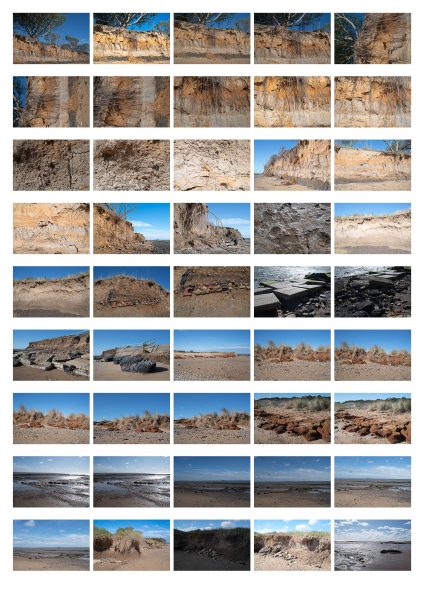
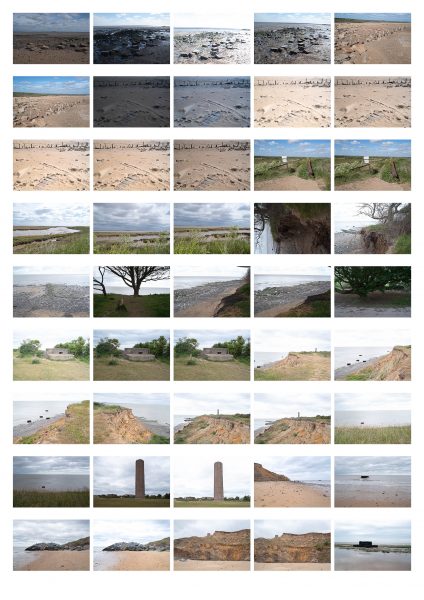
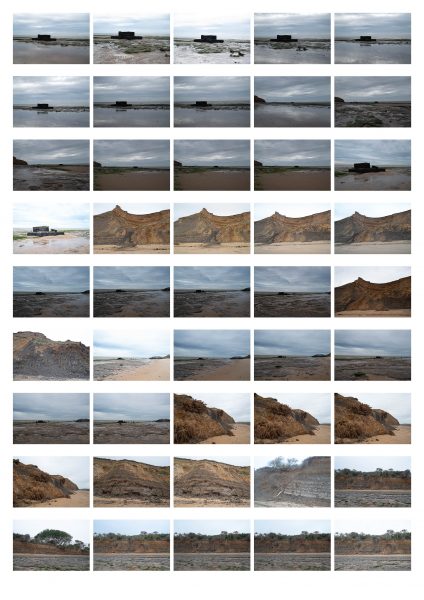
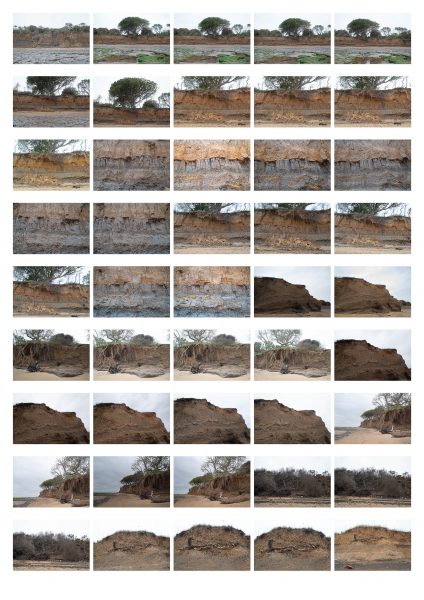
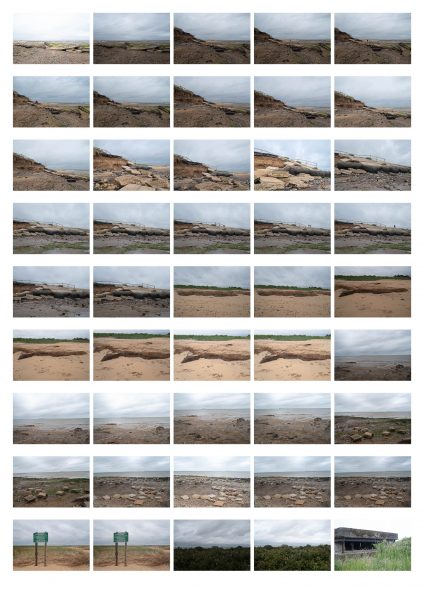
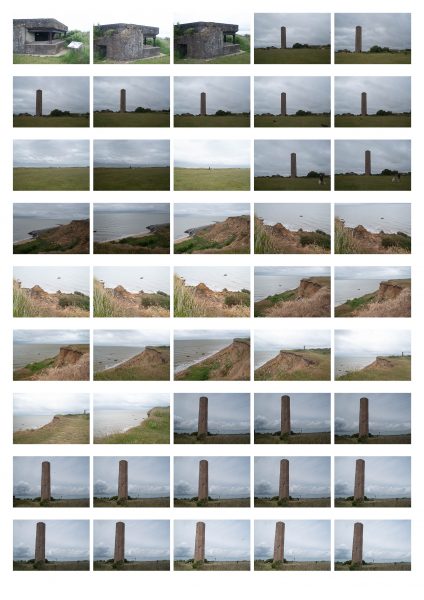
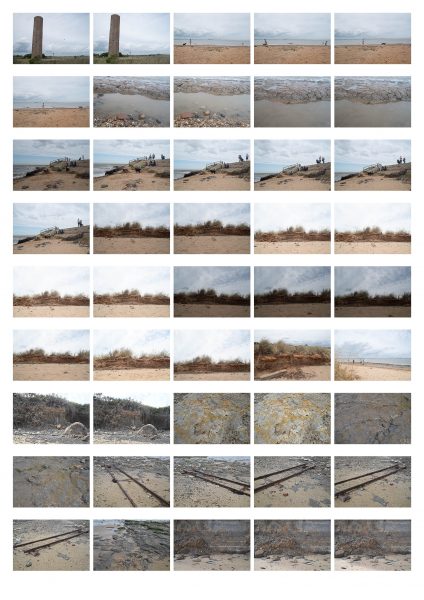
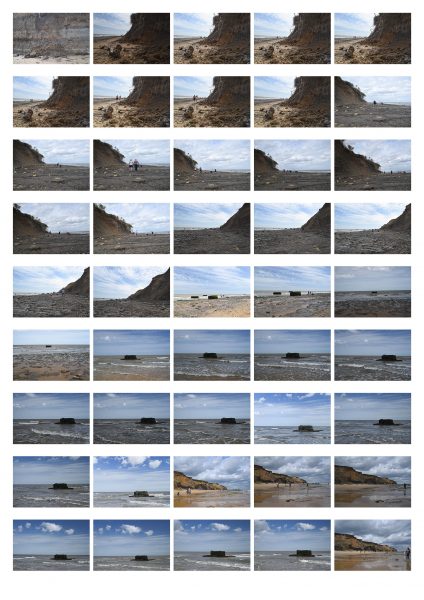
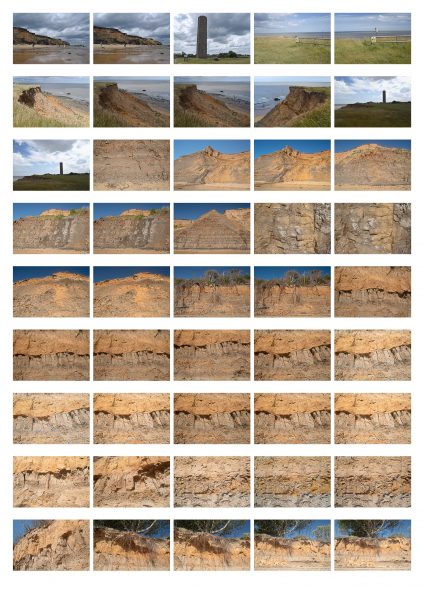
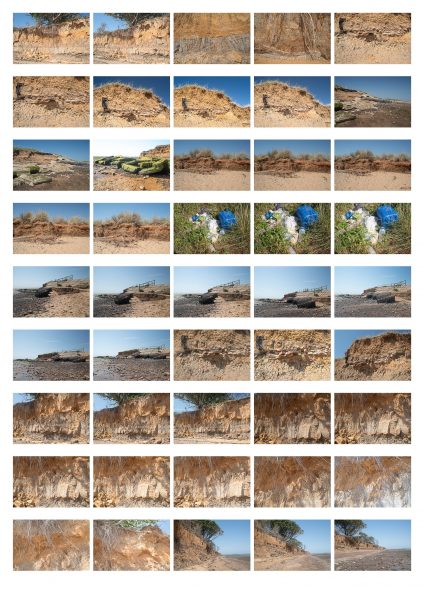
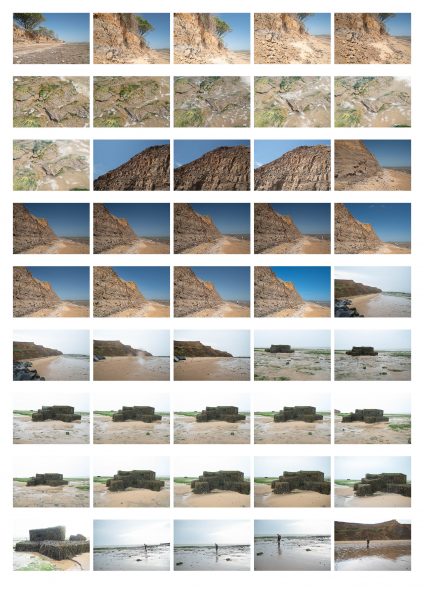
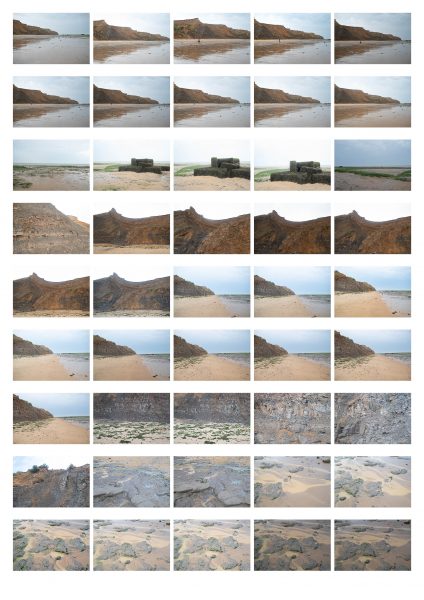
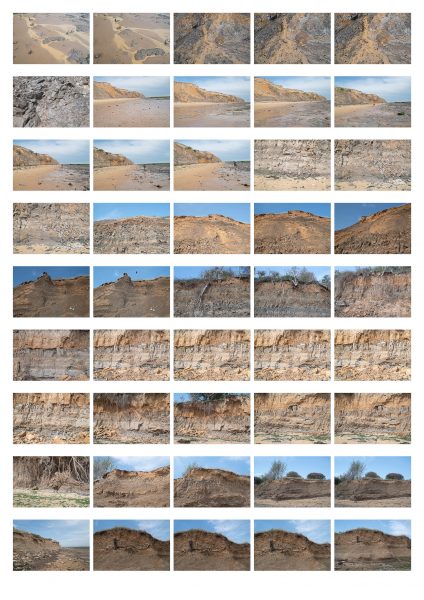
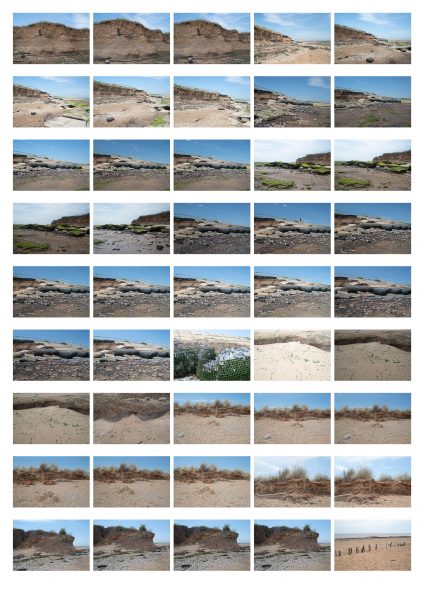
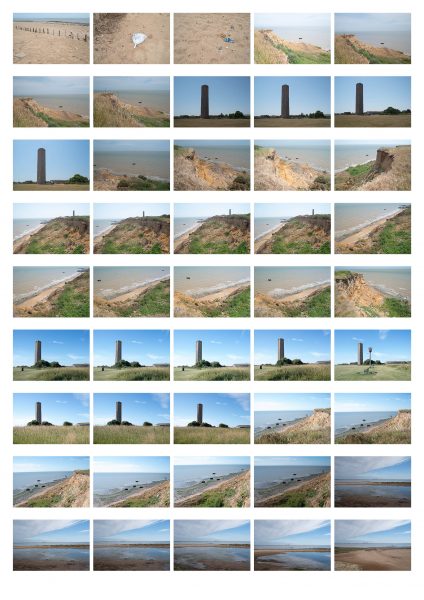
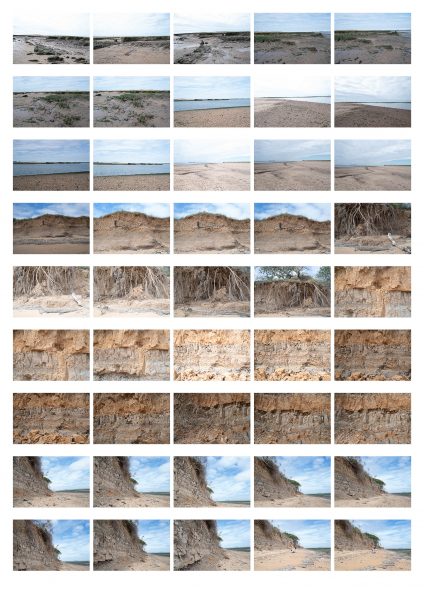
Demonstration of technical and visual skills
I’ve certainly had some difficulties in getting to grips with producing larger images. The full frame 35mm seems like a lot of image to fill with a lot of elements to fit together. My technical skills are improving though. I have slowed down. After each shot which I take time to compose and get exposure settings right, I view the image with the histogram and look carefully at it with a hood loupe. This is new for me. In the past I’ve had a tendency to click away only to be disappointed when I got home and viewed the images on the screen. Hopefully I’m getting into better habits.
Quality of outcome
Overall I think this has worked well. I have slight reservations that I’ve not stayed close enough to the brief. The digital book though, I think is excellent. I may need a bit more practice in getting layout right but I can see progression.
Demonstration of creativity
The inclusion of the fossils within the pages visually work well. I don’t consider this to be a wildly creative piece but hopefully a well executed and gentle commentary on a beautiful area of landscape.
Context
I think this is appropriate.
 Landscape, Place and Environment