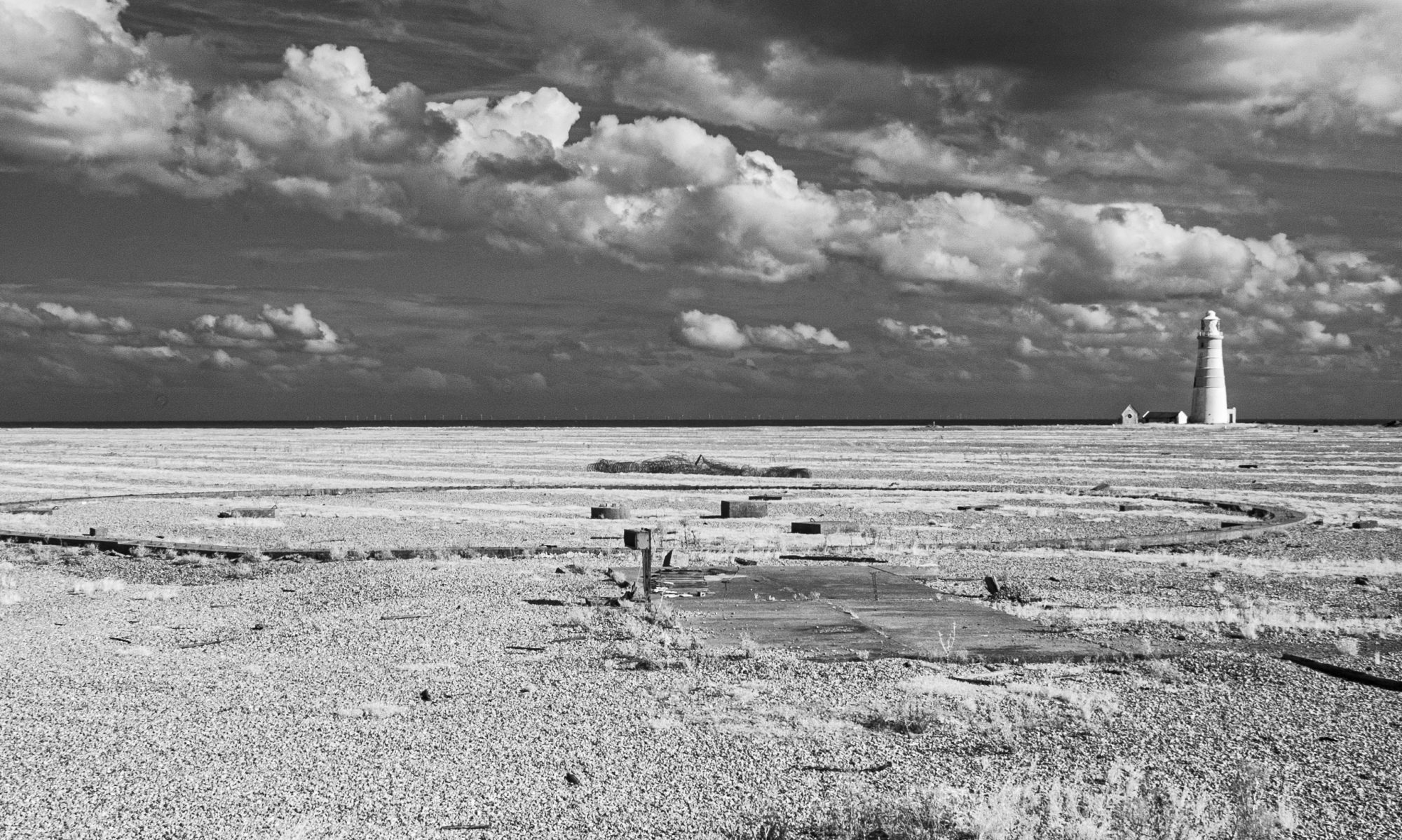
Definition of Place
“Photographs slice space into place; land is framed as landscape. Representation envelopes reality; it becomes an act of colonisation. Photography contributes to characterising sites as particular types of places within the order of things. LIZ WELLS”
Alexander, 2015. pg 178
In some ways, ‘Space’ and ‘Place’ are almost interchangeable, space suggests something more open and expansive whilst place is more defined. (Alexander, 2015) Our very presence in, or view of, a space tends to bring that definition however we define place according to a number of categories.
Supranational
Supranational place making relates to ideologies. This could be religious, economic or political. Saar and Palang reference ‘the garage’ as a place that people used to hoard food in post-socialist food shortages for example. They also argue that state controlled public spaces tend to have less meaning than those within Capitalist societies. Also, the move towards more global economies creates certain inequalities and decides on what places are more important (and hence worthy of preservation) than others. We use the term ‘Third-World’ for example. There are also factors such as gender and age. The home for example has tended to be associated with Women.
A supranational place could be seen as a broader more general mass identity of a region based on religious, political or sociological ideology or perhaps a historical event as in the example of a memorial.
National
In many ways this relates to how the ‘State’ attributes certain meanings to spaces and controls our behaviour within them. Defining these areas by name and also defining the activities that are attributed to that area. This is accomplished through city planning and rule making. An interesting example that Saar and Palang give, is how the local Government in LA changed the nature of the seats at the bus stops to deter homeless people. In London of course, the approach was less subtle, with uncomfortable spikes outside doorways to deter rough sleeping.
Place making on a National scale can relate to National identity or at least how it’s projected.
Local
Saar and Palang recognise Locality as a “counterforce to globalisation” and see it as our way of marking territories and boundaries. Local place making essentially relates to community and local/regional identity.
Individual
Individual place making refers to our connection with a place often through our experiences whether positive or negative. They can be markers of time, possibly nostalgic and connected with memory of a place. Childhood memory is particularly relevant and Saar and Palang suggests our connection can be particularly strong if that place is no longer there or has changed significantly. Our connection can be strong also, if the place represents a time of significant change or growth.
Places will often evoke certain emotions particularly those of security, comfort and belonging.
Foreign Sands – Ben Soedira
“It was not only about me questioning my identity, but the city of Dubai itself,” says Soedira, whose parents have recently decided to leave Dubai. “It’s quite strange because there is no other reason why I would go back there. I go there because it’s home.”
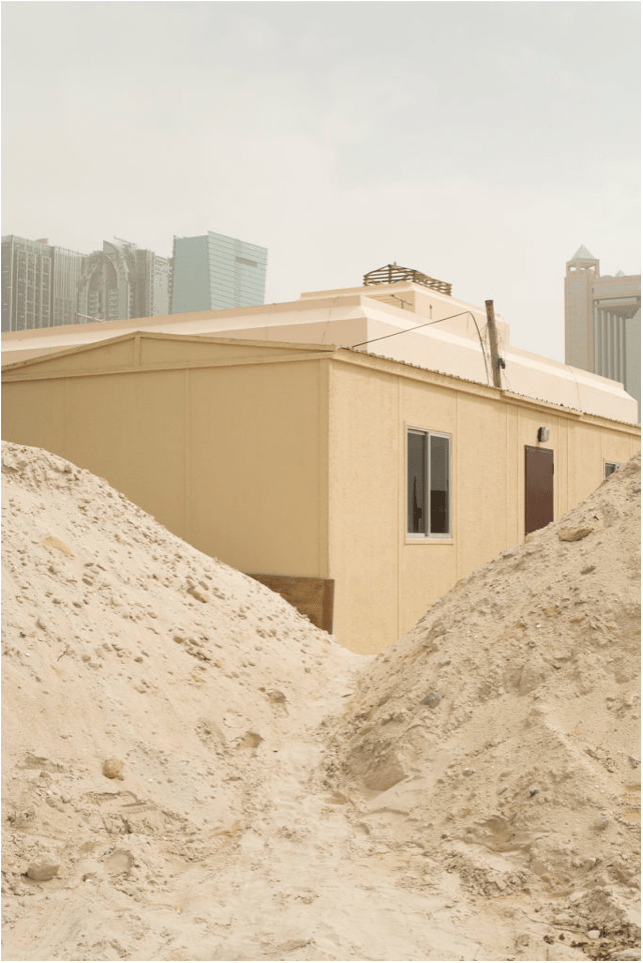
Soedira was born and raised in Dubai however moved to Glasgow when he was 18. Photographing Dubai was a way of exploring his own identity. He notes that it has changed significantly, almost unrecognisable to what he remembers. What was significant to him was the colours of the city which are in stark contrast to where he is now. This can be seen in the general colour palette of the images, “dusty tones relating to the buildings, fabric, skin and Sand.” (Warner, 2020).
On a supranational level, Dubai is seen as a large, multi-cultural Arab state that is characterised by extravagance and commerce. On a National and Local level, it is probably seen quite differently by those who live there or by the tourists that visit. For Soedira, it is a Place that he calls home because of his memories of childhood.
Place in relation to time
Photography immortalises a point in time. Place is essentially a static concept (Tuan, 2018) however time is movement and the relationship between the two is complex. Tuan categorises three approaches to view the relationship between Time and Place:
- Time as motion and Place as a pause in the temporary current
- Attachment to Place as a function of time (“it takes time to know a place”)
- Place as Time made visible (as a memorial to times past)
For the purposes of assignment three, I’m concerned with the third, “Place as Time made visible” in terms of changing Climate and Geography which can be documented through piecing together the evidence from the past in relation to fossils, pollen samples, rock samples and various artefacts that can be found in the area. That evidence however is very fragmented. In many ways, we are “restricted to particular snapshots in time” (Lawton, 1983)
Before the evolution of humans, the landscape was shaped by the changing climatic events. Human beings however have always been “increasingly an agent for landscape change” (Lawton, 1983) It wasn’t until around the eighteenth century that humans began to have an interest in collecting, cataloguing, measuring history as a means of strengthening and contextualising our sense of self. That’s not to say the idea of ‘Science’ in terms of Philosophy and Mathematics wasn’t already well established but instead the act of formal exploration, bringing back samples from the Galapagos for example in order to understand history and evolution (which is Time!).
This act of cataloguing and preservation is an aid to memory and a way of anchoring ourselves to our past. When we feel as if things are changing too fast in particular, there is a nostalgic desire to look back, almost to steady ourselves from the rapid change.
The Last stand -Marc Wilson
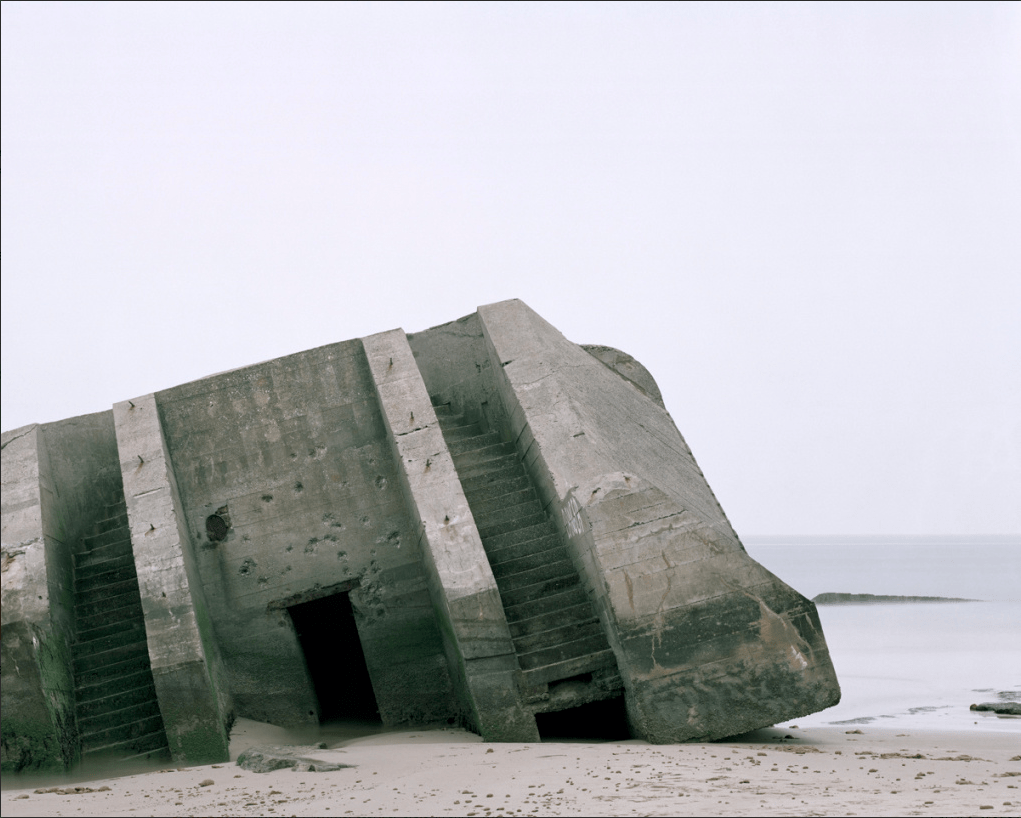
What caught my eye was the second world war defence tower as there are some at the Naze. Wilson emphasises the natural process of time in the way that these once important structures are displaced and slowly decaying. There is a conversation about aestheticising decay and making something beautiful out of something terrible. (Wilson, 2014) However these are pieces of history which all have their story.
Chernobyl by Guillaume Herbaut
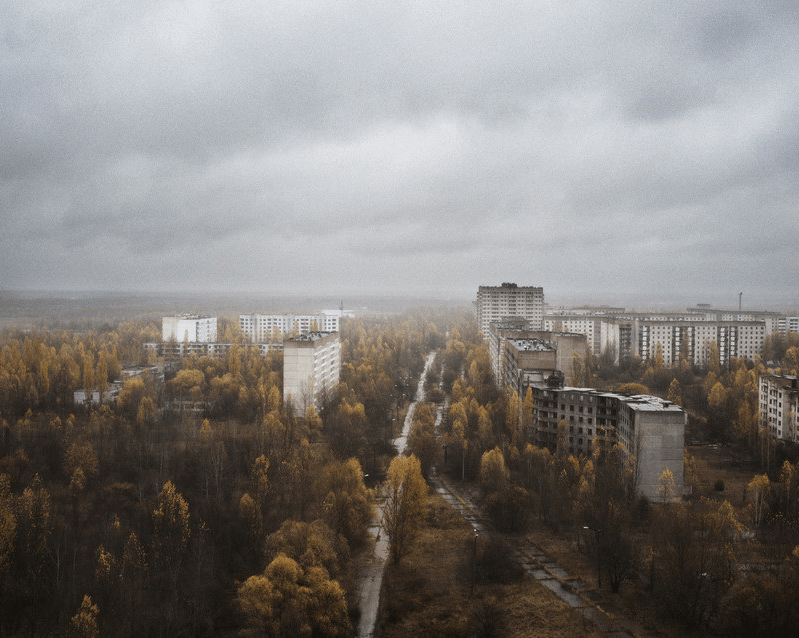
Pripyat, the site of the Chernobyl nuclear disaster has been well photographed. It has become a Place for visitors to engage in a bit of dark tourism. It has historical connections of course and stands as a memorial to the tragic events which are still unfolding. What is of interest to tourists and photographers, as well as perhaps a sense of the macabre is also the effect of time. Although there are a small population that remain in Pripyat, Humans have essentially retreated from the area (because it is unsafe) however several decades on, ‘Nature’ has not only survived but thrived in some instances.
References and bibliography
- Alexander, J., 2015. Perspectives On Place. Bloomsbury Publishing.
- Herbaut, G., 2016. Chernobyl By Guillaume Herbaut – Instituteartist.Com. [online] Instituteartist.com. Available at: <https://www.instituteartist.com/Chernobyl-by-Guillaume-Herbaut> [Accessed 18 June 2020].
- Lawton, R. “Space, Place and Time.” Geography, vol. 68, no. 3, 1983, pp. 193–207. JSTOR, http://www.jstor.org/stable/40570691. Accessed 16 June 2020.
- Saar, M. and Palang, H., 2009. The Concept Of Space And Place. [online] Lrlr.landscapeonline.de. Available at: <http://lrlr.landscapeonline.de/Articles/lrlr-2009-3/articlese2.html> [Accessed 16 June 2020].
- Tuan, Y., 2018. Space And Place. Minneapolis: University of Minnesota Press.
- Warner, M., 2020. Foreign Sands. [online] British Journal of Photography. Available at: <https://www.bjp-online.com/2020/02/foreign-sands-ben-soedira-dubai/> [Accessed 18 June 2020].
- Wilson, M., 2014. The Last Stand. [online] placesjournal.org. Available at: <https://placesjournal.org/article/the-last-stand/> [Accessed 16 June 2020].
 Landscape, Place and Environment