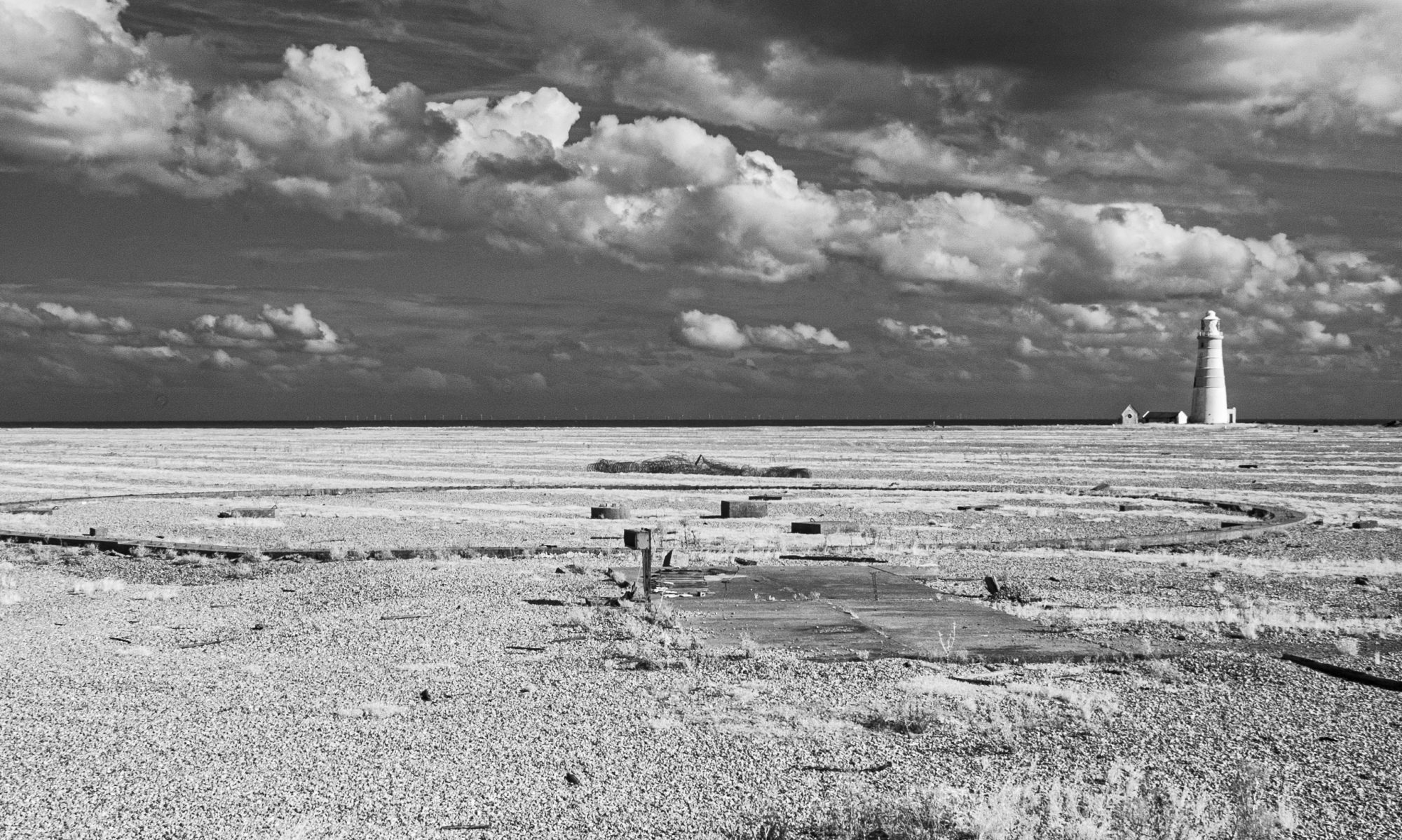
‘The Naze’, Walton
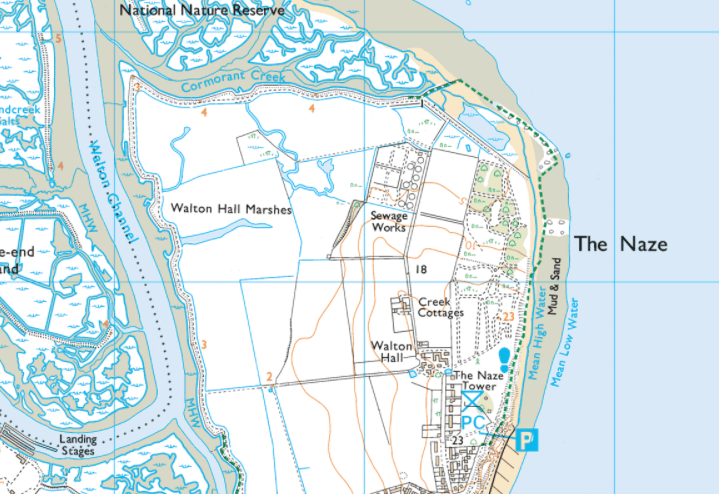
The East of England coastline has changed significantly over the last 2000 years sadly mostly due to coastal erosion. The soft ‘Red Crag’ cliffs are being lost at a rate of anything up to two metres a year.
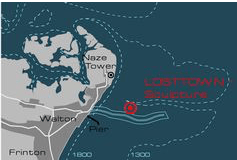
Going way, way back, 50 million years ago during the Eocene period, this area would have been situated nearer the equator and had a sub-tropical climate. The warm sea that covered this area was home to numerous species and laid down a layer of silt know as ‘London clay’ now home to some of the best preserved fossils in the world.
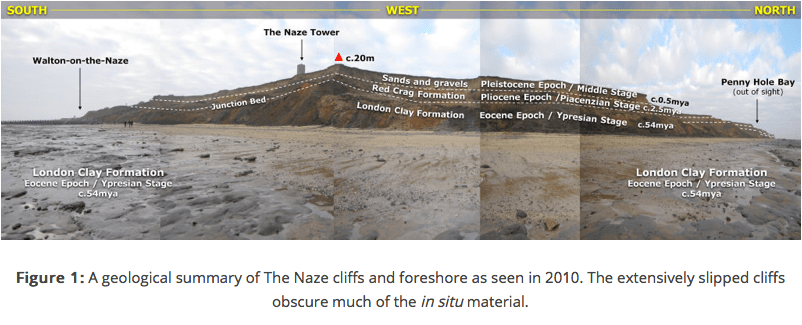
Climatic changes and shifting of continents produced the clearly defined layers within the cliffs today. Around two million years ago, the sandy layer of ‘Red crag’ was deposited which is around 4-5 metres thick. The red colour comes from the reaction of the former pyrite (iron sulphide) in the London clay that oxidised to produce iron oxide.
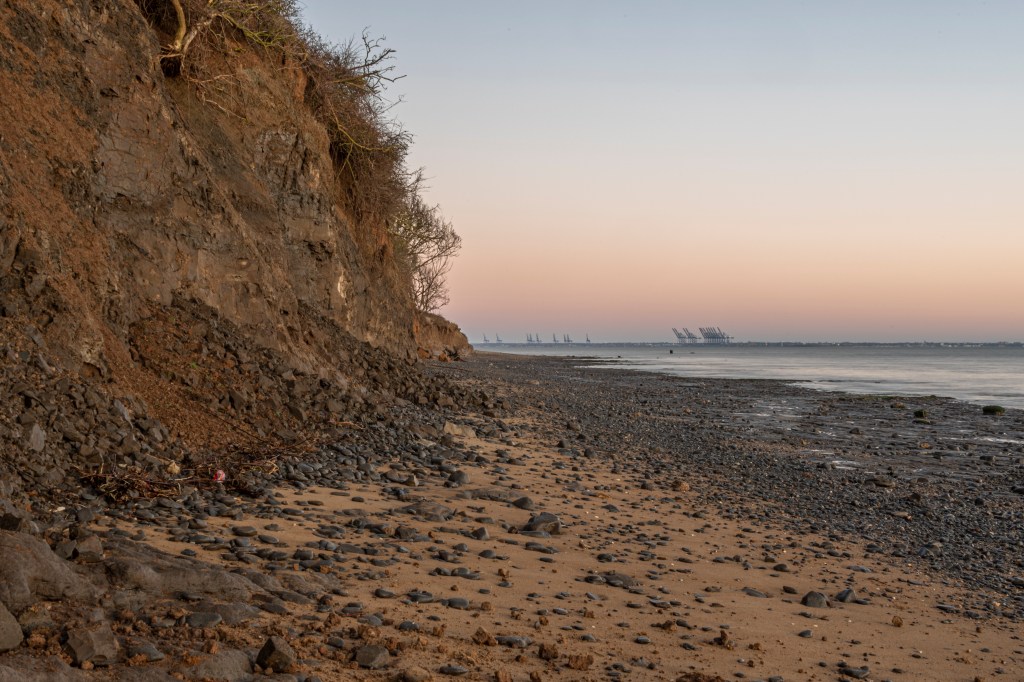
The fossils within the layers of sediment give us a good idea of the climatic changes and shifting of sea levels. Fossils of mammals and species of plants and pollen found in tropical climates give way to species preferring colder climates and the discrepancies in the layers of the cliffs show the warming and cooling of the climate.
In more recent history, The Naze was settled by the Romans, at the time much further inland and would go on to become a farming village. By 1700’s it had become a coastal region and it’s population significantly reduced. By Victorian times, the area would become a popular seaside resort. To the south of the Naze is the seaside resort of Walton on the Naze with it’s vast pier.
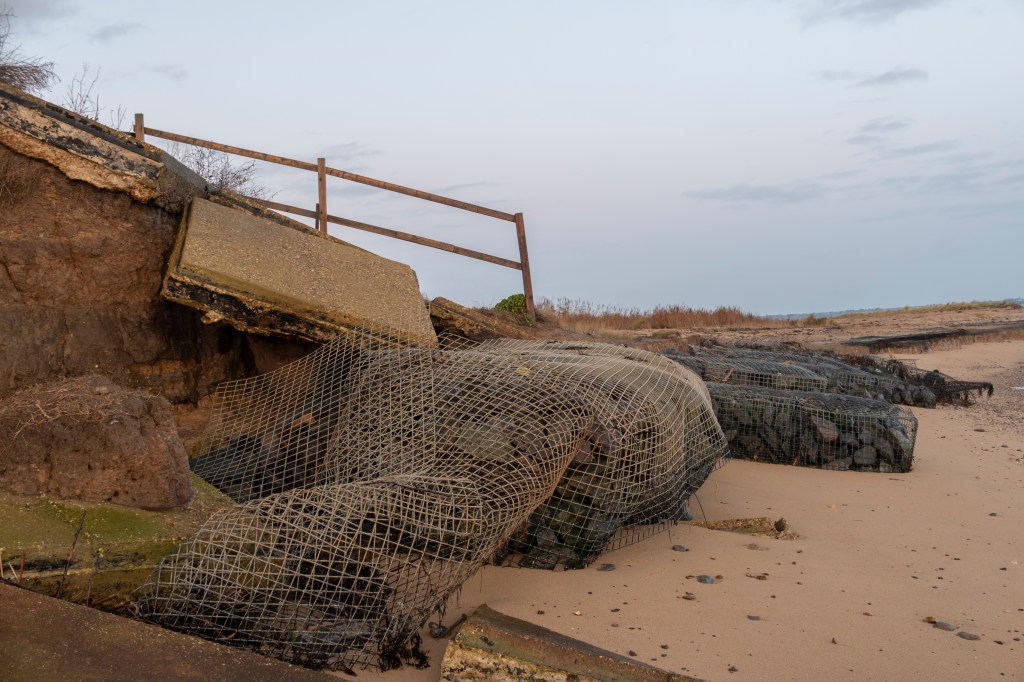
A good indicator of the coastal erosion are the Second world war pillboxes that once stood on the cliffs. These are now situated out at sea only visible at low tide.
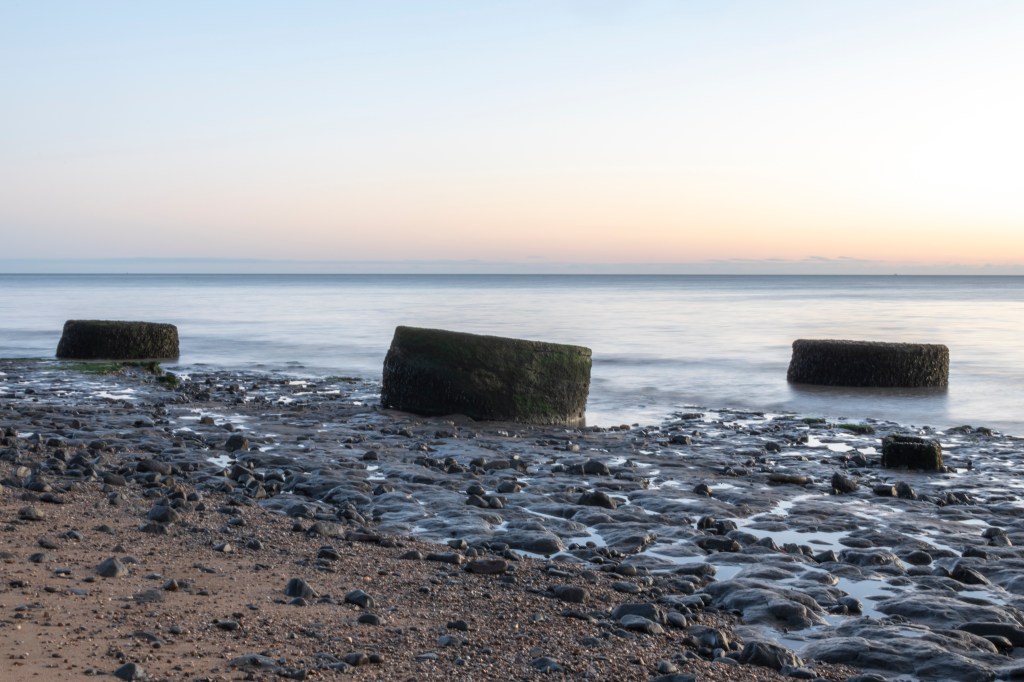
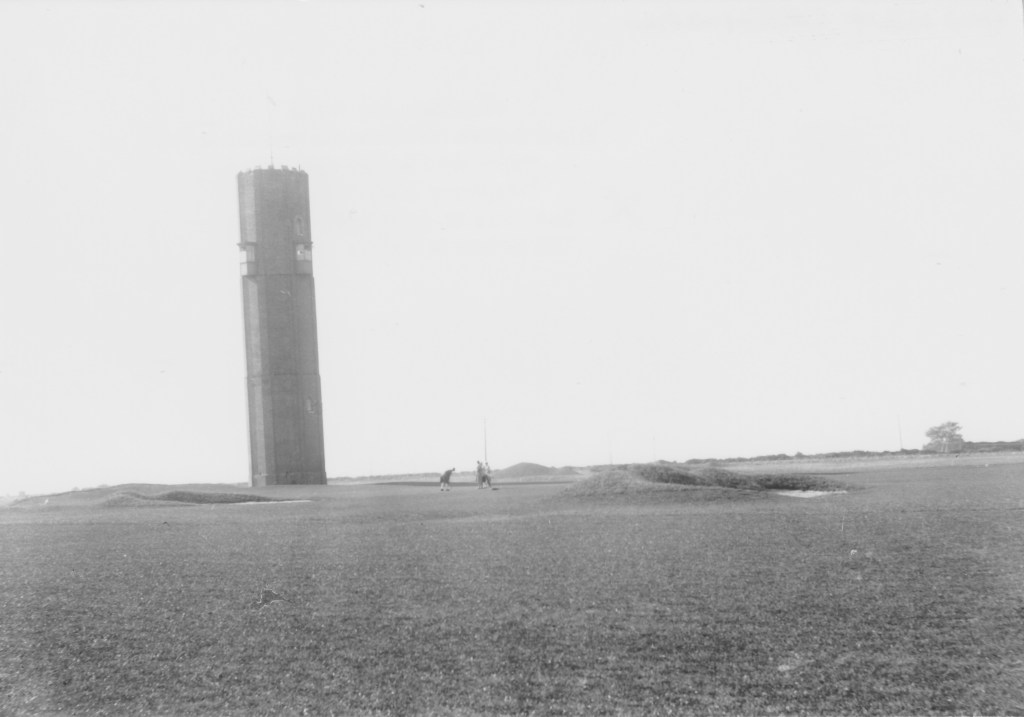
The area is known as a ‘Site of special scientific interest’. Despite a lot of money being spent on sea defences around the country, other than the sea wall and the groins further down the coast, this area has none and sadly much of this area and it’s famous tower built as a lighthouse in 1720 will likely be eroded by the sea in the next 50 years.
References and Bibliography
- Essex Wildlife Trust, 2020. The Naze Centre | Essex Wildlife Trust. [online] Essexwt.org.uk. Available at: <https://www.essexwt.org.uk/nature-reserves/naze> [Accessed 14 April 2020].
- Discoveringfossils.co.uk. 2020. Walton-On-The-Naze (Essex) | Discovering Fossils. [online] Available at: <http://www.discoveringfossils.co.uk/walton-on-the-naze-essex/> [Accessed 14 April 2020].
- Losttown.net. 2020. LOST TOWN | Background |. [online] Available at: <http://www.losttown.net/the_project/background.html> [Accessed 14 April 2020].
- Dixon, D., 2020. Pill Box On The Beach At… (C) David Dixon. [online] Geograph.org.uk. Available at: <https://www.geograph.org.uk/photo/3588710> [Accessed 14 April 2020].
 Landscape, Place and Environment