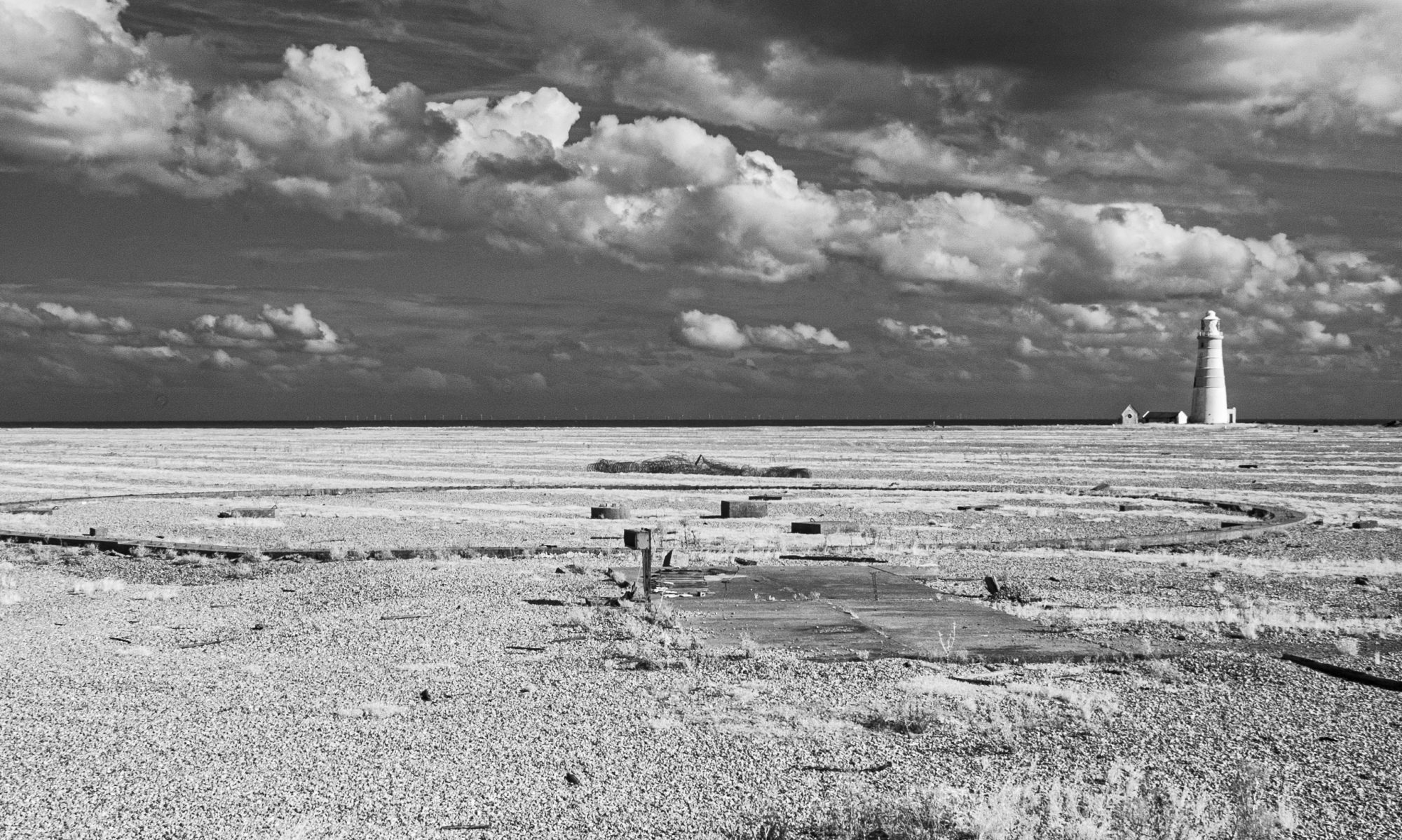
The background to Dara McGrath’s “Project Cleansweep” is a project consisting of images of uninhabited islands in the UK used for chemical testing by the MOD. The images presented are beautiful. These uninhabited spaces have a stillness and natural beauty, many of which have been untouched by humans for up to a hundred years. These spaces however are also toxic. In their experiments with deadly chemical weapons, the MOD used sheep, monkeys and cattle to research the effects of these potential weapons.
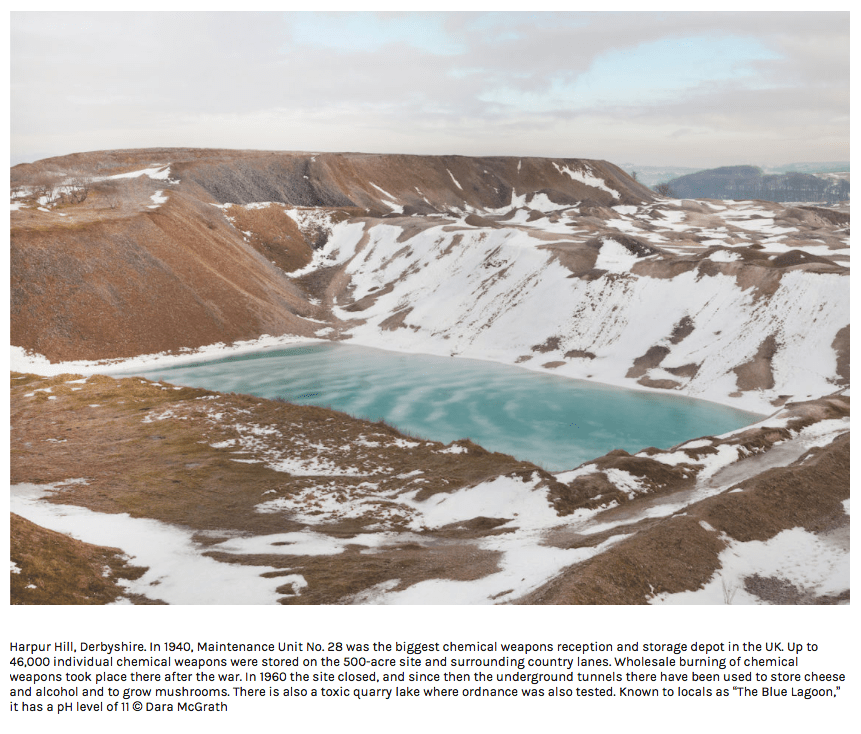
Whilst the background story of these images are horrific, McGrath’s intention for this piece was not wholly political rather it was an exploration of the ever-changing landscape and the landscape as a living object. Residents nearby to these areas were often unaware of the gruesome history of these spaces. And so, in some ways, ‘Project Cleansweep’ can’t avoid being political.
“[The MoD] experimentation was quite successful but their cleanup afterwards was very sloppy,” says McGrath. “Anthrax can remain active for over 100 years afterwards in the land. It wasn’t until the Dark Harvest Commando left soil samples from the island outside the Conservative Party annual conference in 1984, and outside Porton Down [a government military science park in Wiltshire], that there was a lot of community activism that pushed for the military authorities to clean up the islands.”
(BJP Online, 2017)
McGrath has been deliberately subtle in the way in which he depicts these landscapes. Most people, regardless of their level of political engagement will question the ethics of government activity with regards to weapons testing. The question is, ‘how much do we really want to know about what goes on?’ In truth, most people don’t want to know or have to think about it. We accept to some degree that these activities in the end keep us safe.
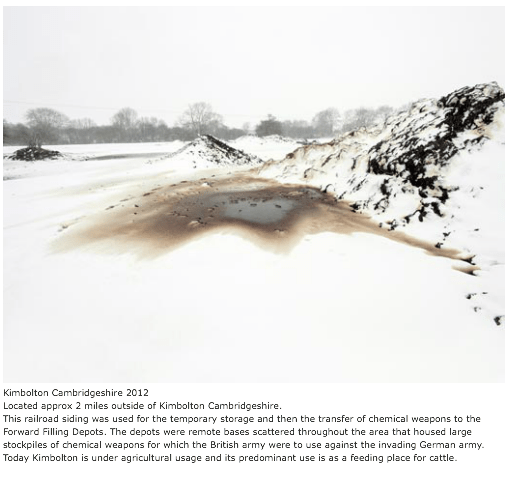
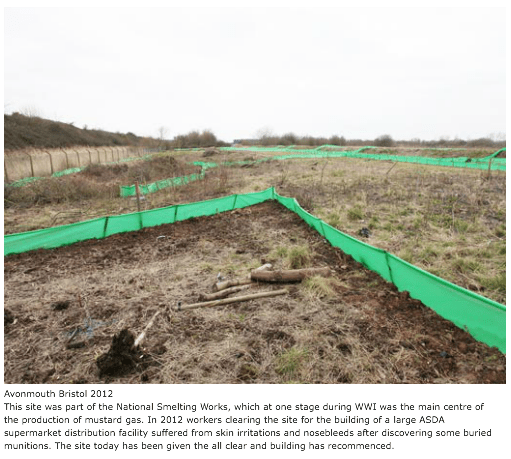
The text accompanying each image gives a brief history of each site. McGrath is deliberately non-judgemental. This approach allows for wider debate for the viewer. rather than presenting a specific political view, McGrath approaches the piece from a neutral documentary viewpoint.
References and Bibliography
- British Journal of Photography. 2017. Dara Mcgrath Unearths Dark Landscapes With Project Cleansweep. [online] Available at: <https://www.bjp-online.com/2017/07/dara-mcgrath-unearths-dark-landscapes-with-project-cleansweep/> [Accessed 9 April 2020].
- Daramcgrath.com. 2020. Dara Mcgrath – Photo Artist. [online] Available at: <https://daramcgrath.com/Project_Cleansweep_Beyond_The_Post-Military_Complex.html> [Accessed 9 April 2020].
 Landscape, Place and Environment