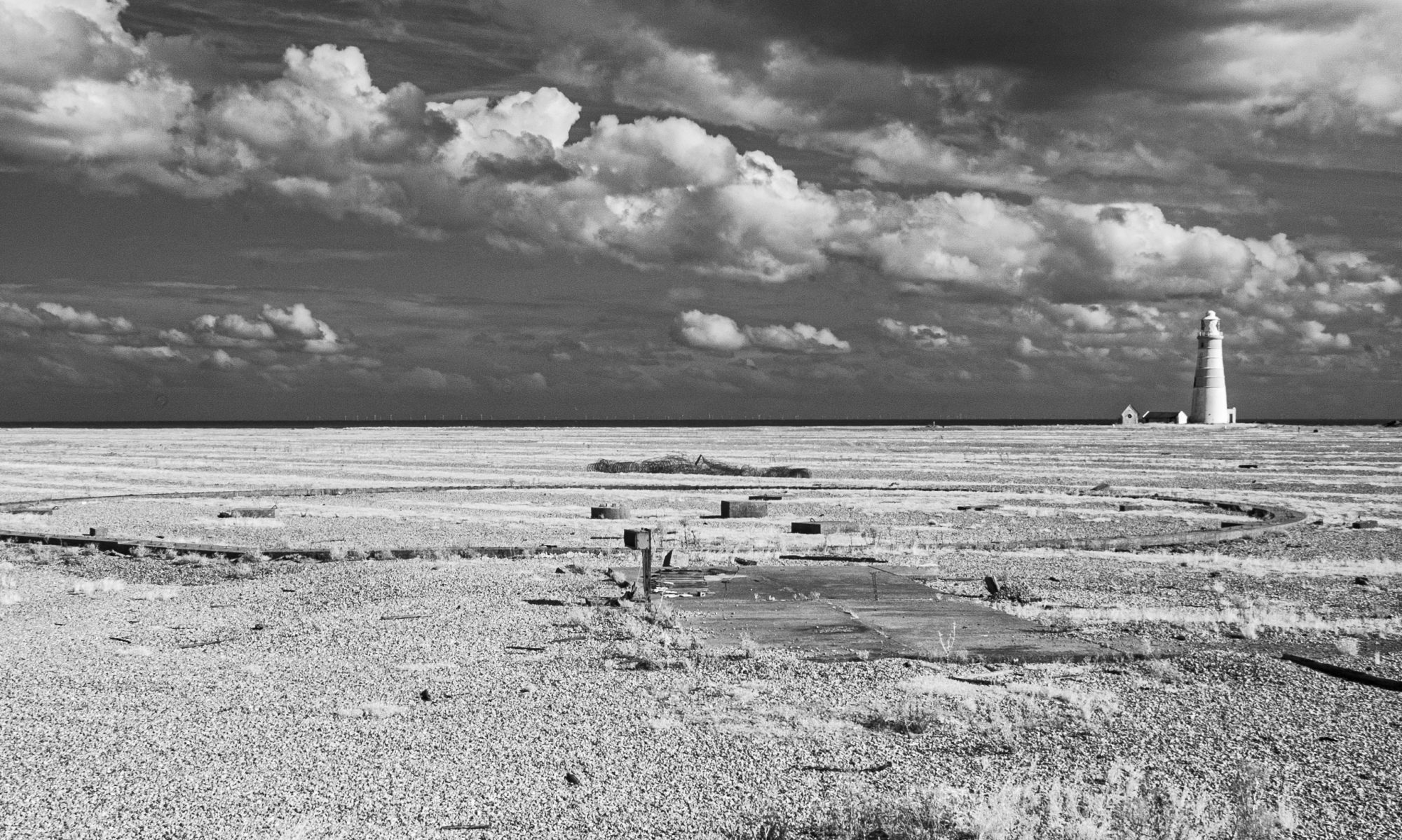
David Campany – Safety in numbness
David Campany’s essay explores the subject of what has become known as ‘Late photography’. It relates to the position of the still image as having a type of memorial status as opposed to the ‘real time’ action of video and cinematic mediums. Campany looks specifically at the work of Joel Meyerowitz, ‘Aftermath’, who as the sole access photographer documented the clean up operation following the World Trade Centre attack in 2001.
No photographers were allowed at the site as it was regarded as a crime scene, however with persistence and charm, Meyerowitz befriended the workers and got access. Somehow there is an element of ‘reverence’ in his choice of camera, an old fashioned Deardoff plate camera. His process therefore is slow and deliberate. It’s as if Meyerowitz was seen as someone who could be relied upon to fulfil this responsibility. Meyerowitz points out that he took the images ‘avoiding originality’.
‘I was just going to be there as a witness and photograph it for what it was, without trying to put on it some formal idea of how to photograph it. I was told how to photograph it by the thing itself’
(Campany, 2003)
As Campany points out, there is a well established relationship between photography and memory. Photographs can be portals to history and remembrance but can also act as a means of distortion. Memory itself is selective and personal.
‘..the frozen image is often used as a simple signifier of the memorable, as if there were a straightforward connection between the functions of memory and the ‘freezing’ capabilities of the still camera.’
(Campany, 2003)
There is a sense of ‘presentness’ in relation to the moving image which has become synonymous to the ‘here and now’ in the context of news bulletins and ‘events unfolding’. The photograph has been relegated to a position of nostalgia.
What Campany outlines is the history of photography and it’s technological evolution in relation to it’s use. In it’s early days, when equipment was cumbersome and the development process more lengthy, photography was very much used as ‘evidence of an event’ taken after the fact. When cameras became more compact and accessible, photographers would be on the ground shooting the action. As technology has progressed, we now have the ability to ‘livestream’ moving image. Why have one still image when you can have a series of thousands in real time?
Rather than being seen as a lack of relevance of the still image, it may be a testament to the importance of a ‘great’ images within our collective conciseness and their ‘memorial’ nature. Great photographs can take on an iconic status. Although as Campany points out, the danger is that these images become a vehicle for ‘mass mourning’ and allows a sense of detachment from the event.
There is a sense in which the late photograph in all its silence, can easily flatter the ideological paralysis of those who gaze at it with a lack of social or political will to make sense of its circumstance.
(Campany, 2003)
What can happen with these types of images is that they fuel this odd sense of sentimentality without moving towards proper analysis and reflection.
Aftermath: World Trade Centre Archive (2006) – Joel Meyerowitz
I think this is an important body of work. It is document, testament and in a sense memorial. I can remember well the news footage of the plane crashing into the towers. It didn’t seem real at the time. A colleague called me out into the waiting room where we had a TV that had News24 on with the sound down and subtitles. I don’t think any of us really knew what to make of it at the time.
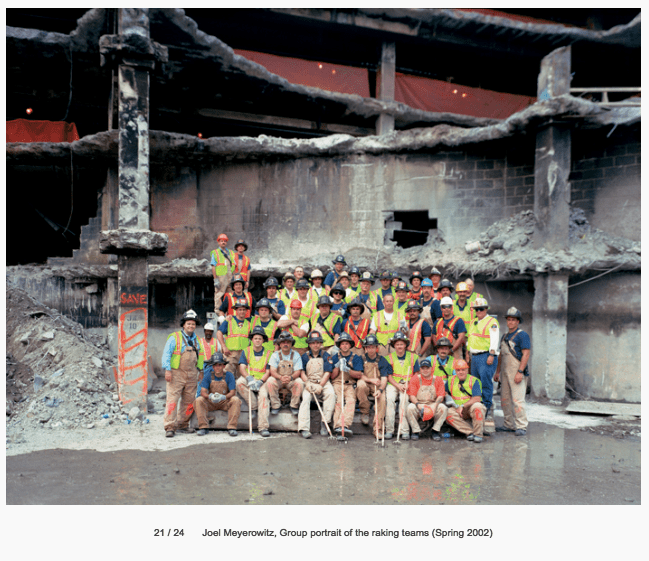
The image above is in the style of a formal wedding photo or a football team. The guys don’t look overly sombre, there seems to be a sense of comradery. These are ordinary guys. They are probably often overlooked. They might even be ‘jobsworths’, a bit misoginist maybe but, they are the ones willingly and enthusiastically cleaning up the mess. The mess would not have just been rubble. There would have been bodies and body parts. Personal belongings, the emotional toll of this operation would have been significant and a heavy burden to carry.
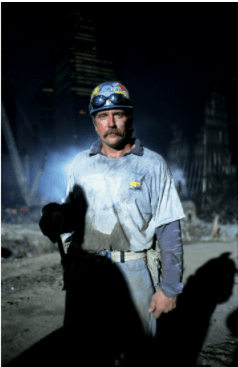
Whilst there’s a sombre mood with regards to the level of destruction, there’s no unnecessary sentimentality. Meyerowitz has simply tried to ‘tell it like it is’. The final book that was produced contains a mix of wider shots that show the extent of the area affected by the attack, group/activity shots but perhaps most striking are the individual portraits. The one below in particular which is used for the cover of the book. The portrait relays strength and dignity but behind the eyes is an emotional pain.
Aftermath is a great example of ‘late photography’. Meyerowitz found a way in, because it was something that he felt was important and something that he could contribute to the healing process but also to history. I think it’s impossible for an experienced photographer like Meyerowitz not to have some element of narrative within what he chose to shoot or what he chose to include-discard within the final edit. (I read that he produced 5000 images). Rather than an act of seeing, there is an act of listening. What the work shows is that life goes on.
References and Bibliography
- Campany, D., 2003. Safety In Numbness: Some Remarks On The Problems Of ‘Late Photography’ – David Campany. [online] David Campany. Available at: <https://davidcampany.com/safety-in-numbness/> [Accessed 6 April 2020].
- Phaidon. 2020. Joel Meyerowitz’s World Trade Center Archive | Photography | Agenda | Phaidon. [online] Available at: <https://uk.phaidon.com/agenda/photography/picture-galleries/2011/september/08/joel-meyerowitzs-world-trade-center-archive/> [Accessed 6 April 2020].
 Landscape, Place and Environment